
When most people think about a dehumidifier in the home, they’re thinking about a damp basement. However, living on the Texas Gulf Coast, I think about it a little bit differently.
Humidity is a daily issue here. It follows me from the kitchen to the laundry room to the pantry, and it gets worse every time I cook, can, or have to hang a load of clothes indoors.
So when Argendon sent me their Shield 35M, a crawl space dehumidifier, I decided to test it everywhere but the crawl space.
Here are nine ways I use a dehumidifier in my home, what worked, and what you should know before you try it.
Why Use a Dehumidifier in Your Home
Moisture builds up in a house faster than most people realize. Cooking, showers, laundry, and even breathing add water to the air, and in a humid climate, that water has nowhere to go. High humidity can leave windows foggy, make rooms feel sticky, cause musty smells, and create the damp conditions that mold, mildew and pests like.
In the summer when we have the air conditioner running, it can have a hard time pulling all the humidity from the air and truly cooling off the house. And if I need to do some canning or blanching it makes it even worse!
A home dehumidifier pulls that moisture out of the air and collects it, either in a tank or through a drain. It won’t fix every moisture problem, but it can make a big difference in the rooms where you spend your time, and in the places where you store things you care about.
One of the best things that the dehumidifier does for me is allows me to do things I want to do, like canning or drying bundles of herbs, when I want to do them and not having to wait on the weather to be cooler or less humid.
9 Ways to Use a Dehumidifier in Your Home
Here are some unexpected ways to use a dehumidifier in your home.
Food Preserving: Canning, Blanching, and Drying
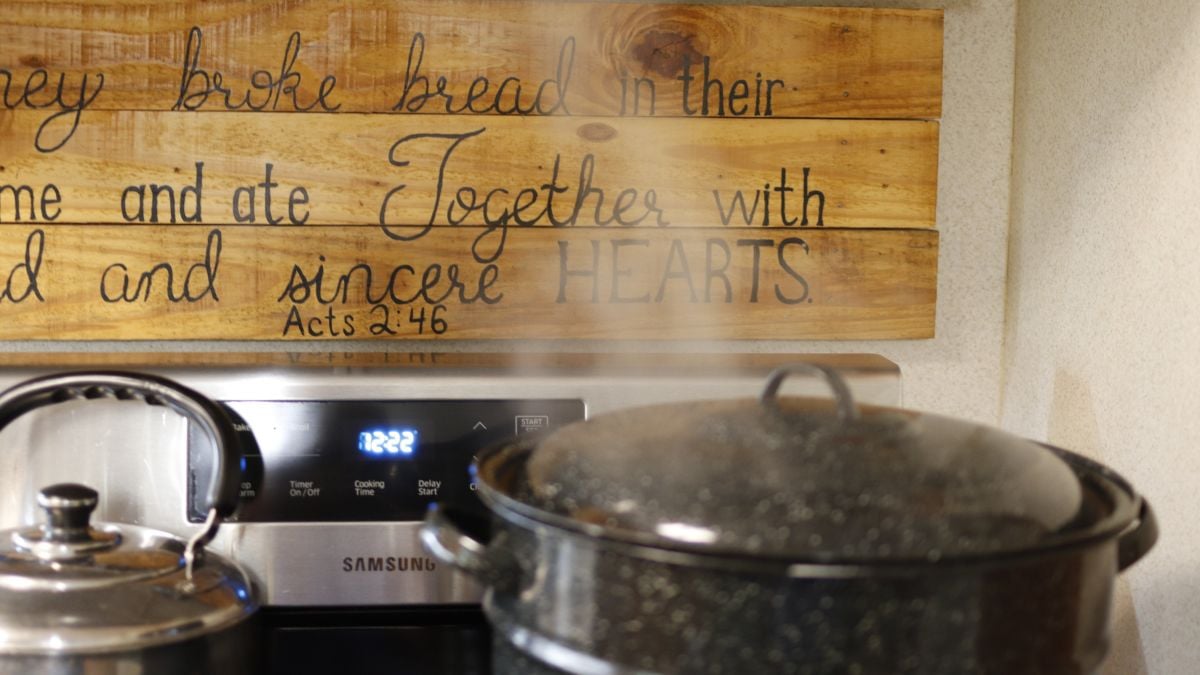
Canning, blanching, and drying food all put a lot of moisture in the kitchen. Between boiling water, steaming pots, and ice baths, my kitchen turns into a sauna during preserving season.
Running the dehumidifier in the kitchen brings the humidity down. The room feels more comfortable, the counters and cabinets stay less sticky, and I’m not wiping down steamy surfaces all afternoon.
I simply set up the dehumidifier on the counter by the sink and drain it into the sink while I’m canning or blanching.
What it doesn’t do: A dehumidifier does not change the canning process. Your processing times, jar prep, and safety steps stay exactly the same, and it doesn’t replace a range hood or ventilation fan. It just makes the room more comfortable to work in.
Tip: Keep the unit away from the stove and any splashing water, and run the drain hose to a sink or floor drain so you aren’t emptying anything mid-batch. Just make sure the hose is situated so that it will actually drain and not get stuck in a coiled hose.

Drying Herbs, Peppers, and Cut Flowers
Air-drying herbs or cut flowers is easy in a dry climate and surprisingly hard in a humid one where bundles can sit for days and risk getting moldy.
With a dehumidifier, I can hang the bundles of herbs or flowers or hang a string of peppers and they’ll be dry the next day without risking mold.
Tip: Make sure herbs are completely dry before storing them in airtight jars. Any leftover moisture can lead to mold.
Protecting Your Pantry and Dry Goods
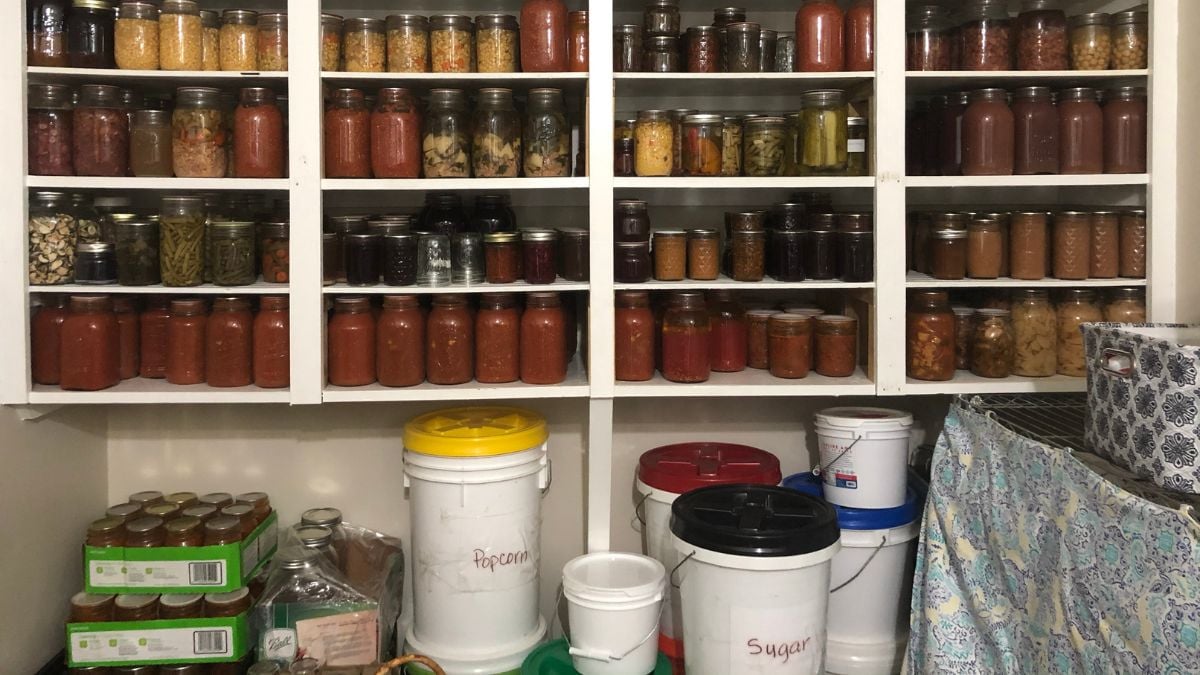
Flour, sugar, salt, and baking mixes can clump in humid air, and a damp pantry can attract pests. Running the dehumidifier where you store dry goods will help protect your food supply.
Humid air is also hard on stored jars. Dampness can rust metal lids, so a drier storage area helps protect the jars you worked hard to fill.
Tip: Store dried foods in airtight containers, since the dehumidifier helps the room, not the food itself.
Storing Harvests Like Pecans and Honey
If you grow or buy nuts, dried beans, or other harvest goods, moisture is the enemy during storage.
We grow pecans which need to cure for about 2 weeks in an climate that is under 60% humidity…that’s hard to accomplish in our climate without a dehumidifier.
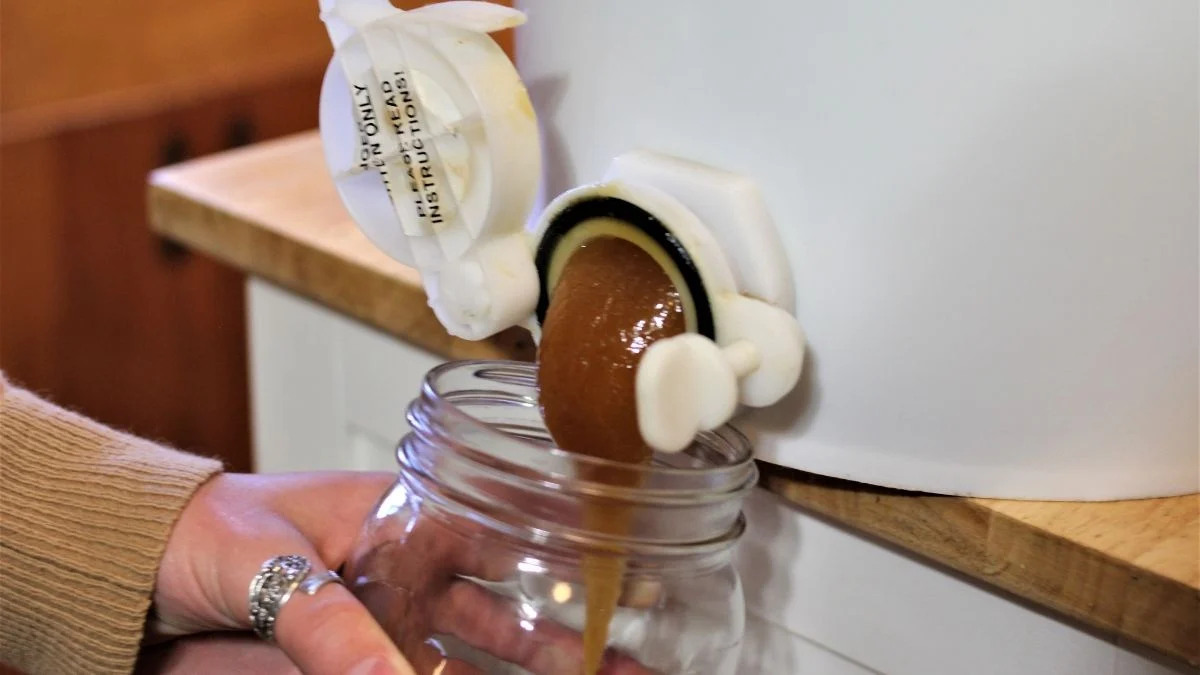
Honey is another one worth knowing about. It absorbs moisture from the air, and honey with too much water in it can start to ferment. We can’t control how humid it is outside when we harvest honey, but we can control the humidity indoors.
We run the dehumidifier while we’re extracting the honey to avoid extra moisture getting into it.
Once it’s jarred, it should be kept in tightly sealed containers, and store it in a drier room, especially in a humid climate.
Tip: Always make sure nuts are properly dried before long-term storage. The dehumidifier supports a dry storage space, but it doesn’t replace proper curing.
Drying Laundry Indoors
On rainy days, or if you don’t have a dryer, hanging laundry inside can leave clothes damp for what feels like forever.
But with a dehumidifier, the laundry will be dry in a hours and not days! You can hang a load of laundry in the laundry room with the door closed and run the dehumidifier on the 50% setting.
This really comes in handy for me when I’m washing costumes from our daughter’s ballet company after a performance and every item has to be lined dried.
Tip: Keep the door closed so the unit only has to dry one room, and leave space between items so air can move.
Reducing Window Condensation
Our house is older and our windows are single pane, which means they fog up when it gets cold. It clears up most days on it’s own but when it’s raining several days in a row, the condensation collects on the window sill….not great!!
Running the dehumidifier during the cold and rainy weeks removes the moisture and therefore reduces the condensation.
Tip: For everyday living spaces, I’d stay at 50% rather than 30%. Very dry air can be hard on wood furniture and can make a room uncomfortable.
Garage and Tool Rust Prevention
Tools, cast iron, and anything metal can rust quickly in a humid garage or workshop.
Tip: A dehumidifier helps slow rust by lowering moisture in the air, but it won’t undo rust that’s already there. Oil or season your tools and cast iron as usual.
Closets, Mudrooms, and Musty Smells
Boots, coats, and shoes can hold onto moisture and start to smell. A closed closet, mudroom, or laundry nook is a good place to run a dehumidifier with the door shut.
Note: The unit I have is built for up to 1,000 square feet, so it’s more power than a small closet needs. I’d call this a “close the door and let it run” use, not an everyday one.
Guest Rooms and Seldom-Used Spaces
A room that sits closed up for weeks can get stale and musty, especially in humid weather. Running a dehumidifier for a day or two before guests arrive can freshen things up.
Tip: Open the door and air the room out afterward, and wash bedding as usual. A dehumidifier helps with moisture, not with everything that makes a room smell stale.
Where to Put a Dehumidifier in Your House
Placement makes a big difference in how well it works.
- Keep doors closed in the room you’re drying, so the unit isn’t trying to dry the whole house.
- Leave clearance around the unit so air can flow in and out. Don’t push it against a wall or furniture.
- Plan for drainage. Some dehumidifiers have a tank that needs to be emptied and some drain by gravity through a hose, so place it where the hose can run downhill to a floor drain, sink, or outside. Be sure the hose isn’t coiled in a way that makes draining impossible.
- Keep it away from water splashes
- Put it on a stable, level surface.
- Use a safe outlet. Avoid long or overloaded extension cords, and check the manual for the manufacturer’s guidance.
What Humidity Level Should You Set?
For everyday living areas, a humidity level of roughly 30-50% is commonly recommended.
- 50%: a good general setting for living spaces, windows, and pantries
- 30%: useful for short-term jobs like drying laundry, herbs, or a damp room, but too dry for long-term living areas
- 70%: a looser setting for spaces where you only want to prevent extreme dampness
- Continuous: runs without stopping, which can be handy for tough jobs, but check your electric usage
Pro Tip: A small hygrometer is worth the few dollars it costs, since it tells you what’s actually happening in the room.
What a Home Dehumidifier Can’t Do
There are limits to a home dehumidifier, especially in a humid climate.
- It doesn’t remove existing mold. It helps prevent the damp conditions mold needs, but visible mold needs to be properly cleaned or handled.
- It’s not a substitute for ventilation. Use your range hood and bathroom fans as usual.
- It doesn’t change canning safety. Follow tested canning recipes and processing times.
- It won’t fix leaks or flooding. If water is coming in, you need to fix the source first.
- It uses electricity. If your using a dehumidifier continually, such as in an attic, basement or crawlspace, you need to keep an eye on your electric usage.
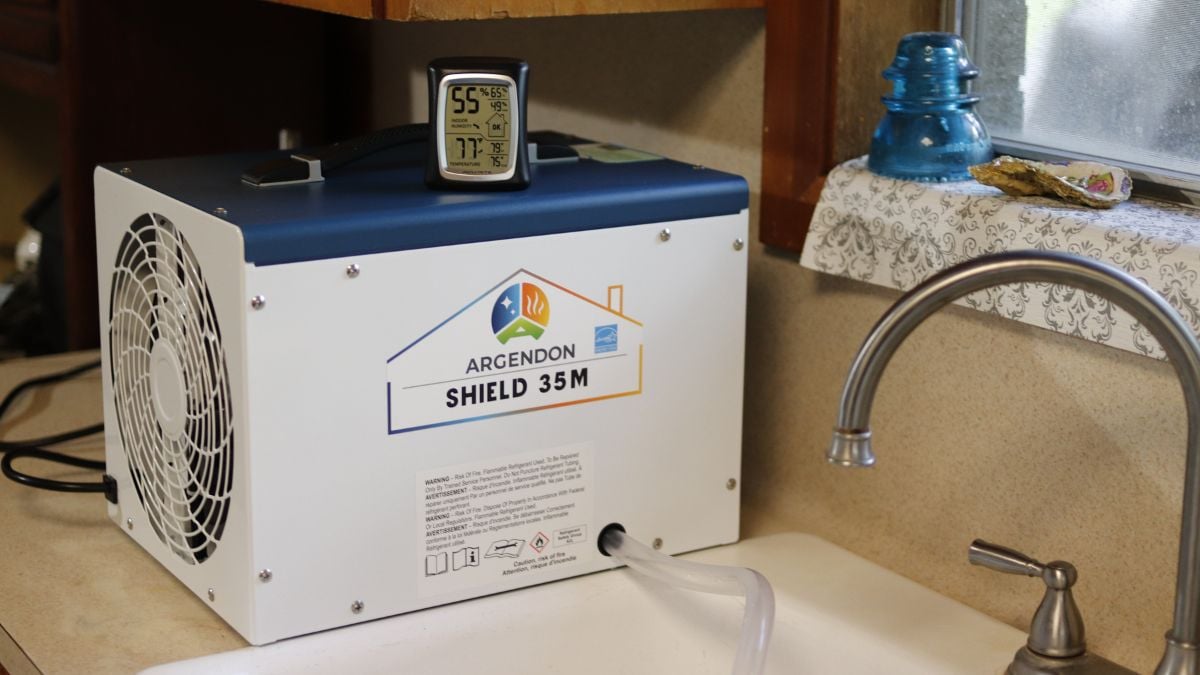
The Dehumidifier I Have: Argendon Shield 35M
The Shield 35M is built for crawl spaces, which means it’s built to run hard in tough conditions. Here are the specs:
- Capacity: 70 pints per day
- Airflow: 115 cfm
- Coverage: up to 1,000 square feet
- Noise level: about 50 dBA
- Weight: about 37.8 pounds
- Drainage: automatic, continuous gravity drain with a hose
- Humidity settings: 30%, 50%, 70%, and continuous
- Other features: built-in humidity sensor, auto defrost, auto restart, ETL safety certified, and a 5-year limited warranty
One thing to keep in mind: the settings are presets, not a dial you can fine-tune.
Frequently Asked Questions
Yes, in a closed room, it can speed up drying noticeably. Leave space between items and keep the door shut.
Place it in the room with the moisture problem, with the door closed and space around the unit for airflow. Make sure the drain hose can run downhill to a drain.
For most living areas, aim for about 30-50%. Use lower settings only for short-term drying jobs.
Yes, the Argendon Sheild 35M can be used inside the house.
If you struggle with damp air, foggy windows, musty rooms, or slow-drying laundry, it can be a real quality-of-life upgrade, especially in a climate like mine.
My Verdict
The Shield 35M is a powerful unit, and using a dehumidifier in my home turned out to be more useful than I expected, especially for laundry, preserving season, and keeping stored goods dry.
Honestly, the biggest limits are the weight of the unit (about 35 pounds) and how to drain the hose in the rooms that don’t have a sink (I just put a the hose in a bucket and the dehumidifier on a chair or counter.)
If you live somewhere humid, I’d think about where moisture causes you the most trouble, and start there. You might be surprised how many ways one machine can help out.

Angi Schneider is the author of The Ultimate Guide to Preserving Vegetables and Pressure Canning for Beginners and Beyond, both published by Page Street Publishing. She has taught canning classes for 177 Milk Street, been featured in Serious Eats, and written for Countryside Magazine. Angi has been sharing gardening, preserving, and simple living skills since 2010.