
I grew up on sweet tea in the South – the kind that’s made by the pitcher and drunk by the glass all day long. It took me most of my adult life to discover there was a whole world of tea beyond that. Now I plan entire sections of my garden around the herbs I want in my cup.
Moringa was one of the first herbal teas I learned to make, and it’s still one I come back to regularly. We grow moringa trees in our Texas garden, which means most of the year I have fresh leaves to harvest. But I’ve also made this tea with dried leaf and with powder, and I’ll walk you through all three methods here.
The short version: moringa tea is mild, easy to make, and one of the most nutritious things you can put in a cup. Here’s how to do it right.
What Makes This Moringa Tea So Good
- It’s one of the most nutritious things you can brew, and one of the cheapest if you grow your own moringa.
- It uses homegrown moringa – fresh from the tree when it’s in season, dried for the rest of the year – so you know exactly what’s in your cup. (If you don’t grow your own, you can buy quality moringa.)
- The flavor is neutral enough to blend with almost any herb you’re already growing: mint, lemon balm, lavender, chamomile, or a strip of lemon zest.
- Covering the cup while it steeps isn’t just a nice detail – it keeps the volatile compounds in the tea instead of evaporating with the steam.

How to Make Moringa Tea – Three Methods
Method 1: Dried moringa leaf (this recipe)
Dried leaf is what most home growers use since it stores well and is easy to measure. Use 1 tablespoon of loosely packed dried leaf per cup. Steep in hot water – not quite boiling, around 175-180°F – for 3 to 5 minutes depending on how strong you want the flavor. Longer than 5 minutes might make the tea bitter. Cover the cup while it steeps.
Method 2: Fresh moringa leaf
If you grow moringa, you can brew directly from fresh leaves. Use a small handful of fresh leaves (about 2 tablespoons loosely packed) per cup. The flavor is slightly greener and grassier than dried. Steep for the same time as dried leaf. Fresh leaves don’t store in the cup as long, so drink it promptly.
Method 3: Moringa powder
Powder is the most convenient form and is widely available online. Use 1or 2 teaspoons per cup – start with 1 teaspoon and adjust to taste. Unlike dried leaf, powder doesn’t steep through a strainer cleanly; stir it directly into the hot water and mix well. Some settling at the bottom of the cup is normal. The flavor is slightly more concentrated than dried leaf.
A note on water temperature: Boiling water is too hot for moringa. Very high heat breaks down some of the heat-sensitive compounds that make moringa nutritious in the first place. Heat your water to around 175–180°F (just before it boils). If you don’t have a thermometer, bring water to a boil and let it sit for 2-3 minutes before pouring.
Putting a plate over the cup while the tea steeps also keeps the compounds from escaping in the steam.

Herb combinations that work well:
- Moringa + mint – bright and refreshing, good for afternoon
- Moringa + lemon zest + honey – the most crowd-pleasing version
- Moringa + lemon balm – gentle and calming, good before bed
- Moringa + lavender + chamomile – deeply relaxing evening tea
- Moringa + vanilla bean – mild and slightly sweet, good for those new to moringa
For flavoring, use about 1 teaspoon of dried herbs or a small strip of fresh zest per cup alongside the moringa.

Why Make Moringa Tea?
Moringa has been used as food and medicine for thousands of years across South Asia, East Africa, and the Caribbean. Modern research has started to confirm what traditional healers have long observed. Here’s what we know:
- It’s exceptionally nutritious. Moringa leaves contain meaningful amounts of vitamin A, calcium, iron, and protein — uncommon in a leafy plant you can brew into tea.
- It’s anti-inflammatory. Moringa contains polyphenols and flavonoids that have been studied for their ability to reduce inflammation in the body.
- It supports liver health. Several studies have looked at moringa’s potential to protect the liver, which is one of the reasons it’s traditionally used as a daily wellness tea.
- It’s been studied as an anti-cancer agent. I want to be clear here: drinking moringa tea is not a cancer treatment. But giving your body nutrient-dense, anti-inflammatory foods is something most of us can agree is a reasonable thing to do.
- It has no caffeine. If you’re looking for an afternoon or evening tea that won’t interfere with sleep, moringa is a good choice.
Note: If you are pregnant, nursing, or taking medication, talk to your healthcare provider before using moringa regularly. High doses are not recommended during pregnancy.
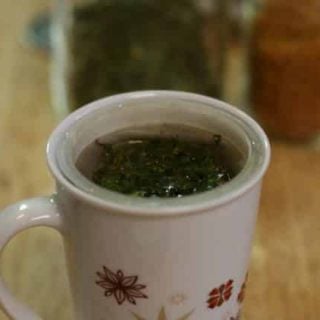
Healing Moringa Tea Recipe
Moringa is a highly nutritious plant that has many medicinal properties. This tea can be be made with many different add-ons to create a flavor you'll love.
Ingredients
- 1 Tbsp dried moringa leaf
- 1 tsp herbal "flavorings" - citrus zest, lavender, lemon balm, mint, vanilla are some favorites
- 1 cup hot water
- raw honey
Instructions
Place moringa and other herbs in tea ball or mesh strainer and place in cup. Pour hot water over herbs until the cup is almost full. Place a saucer over cup to keep volatile compounds from evaporating. Steep for 10 minutes. Sweeten with raw honey.
I want to encourage you to consider growing some herbs for tea this year. Our family is trying to reduce our dependence on grocery stores and even online bulk stores. As we try to supply our food needs, growing herbs to make healing teas help us do just that.

What are some of your favorite healing teas?

Angi Schneider is the author of The Ultimate Guide to Preserving Vegetables and Pressure Canning for Beginners and Beyond, both published by Page Street Publishing. She has taught canning classes for 177 Milk Street, been featured in Serious Eats, and written for Countryside Magazine. Angi has been sharing gardening, preserving, and simple living skills since 2010.
I found you through a Joybilee post. I’m growing a moringa, which is only about 6″ tall right now, but I’m happy to see some ideas of what to do with it. Thanks for sharing!
I’m excited that you’re growing it too! I really love it, it’s such an easy plant to grow. We also eat it in smoothies and sometimes put it in rice. I just kind of sprinkle moringa powder and kale powder in almost anything.
I found your post today and looked into the Moringa tree to grow it, but living in the North where we go well below freezing in the winter, it seems like this is not a tree for me. Where would you suggest that I buy Moringa ready to use from? Thanks!
Hi Laurie, I suggest ordering from Blue Yonder Urban Farms (http://blueyonderurbanfarms.com/store/#!/Moringa-Oleifera-Leaf-Powder/p/36871877/category=0). I know and trust Karen, she’s the one who introduced me to moringa. Also, even if your ground freezes you can grow moringa as an annual to harvest the leaves. Karen has some photos of that on her blog. Thanks!
I also found your site through Joybilee, I’m hoping to learn more about herbs and natural remedies.
Hello to a fellow Herbal Academy student. I’m doing the Intermediate course right now. Part of the Family Herbalist path. Love it!! Have you tried using a french press? Double Wall Tea & Coffee Brewer | Stainless Steel Coffee Pot & Maker – French Press 1 Liter 34 Oz. This is the one I have used. Really got a workout this past flu season. I got it at Walmart.com. Thanks for your site. Great info.
Hi Lora!,,,,,which Herbal Academy? I am very interested in learning more about herbs… thank yOU. Susan. And thank you so much Angiefor your site,… I’m about to order some moringa seeds from Karen at Blueyonder
Hi Susan, the herbal academy that Lora is referring to is The Herbal Academy (formerly The Herbal Academy of New England). You can find it here, https://theherbalacademy.com/?ap_id=schneiderpeeps
Hi Angi,good morning..
Thanks for sharing about Malungay tea..
I would like to know what kind of herb or tea I can make to help my gout?
Thank you..
You’re welcome! I would suggest seeing a trained herbalist for medical issues such as gout. That being said, anti inflammatory herbs, such as ginger, turmeric, rosemary, garlic, and ashwagandha may help, also eliminating inflammatory foods such as sugar and flour should also help.
I found your article informative. But I would like to have a recipe for tea made from Moringa powder.. I am not sure how much powder to use. Thank you
If using moringa in a powdered form use 1-2 tsp. If you are using it medicinally, you’ll want to weigh it to make sure you have the amount recommended by your health care professional.
Thank you
Thank you very much. I just want to follow your instructions and be drinking moringa tea to prevent many hearth related sickness