
All along the rural roads in Texas there are wild mustang grapes and muscadine grapes that grow. Every summer we go grape hunting and pick enough grapes to make grape jelly and grape juice. Mustang grapes and muscadine grapes are not the same plant, although most of us use the terms interchangeably, but they and other grapes are preserved exactly the same.
This recipe was reviewed for accuracy and food safety by Angi Schneider in April 2026. All processing times and methods follow tested guidelines from the USDA and the National Center for Home Food Preservation (NCHFP).
I like to keep track of all my home preserved food with these worksheets so I can know how much we use and need to preserve each hear. You can get the worksheets email to you by filling out the form below.


Mustang grape vs muscadine grape?
While mustang grapes and muscadine grape are not the same plant, they are closely related and functionally the same – they’re wild native grapes. The only person I ever correct on this is my husband and its because it’s one of the foraging things I can identify better than him so I rub it in. Otherwise I just let people call our mustang grape jelly muscadine jelly when they thank me for it.
The easiest way to tell the difference between mustang grapes and muscadine grapes is to look at their leaves. Mustang grape leaves are a green on the top side and gray on the underside, they’re also fuzzy. Muscadine grapes are green on both sides and not fuzzy.
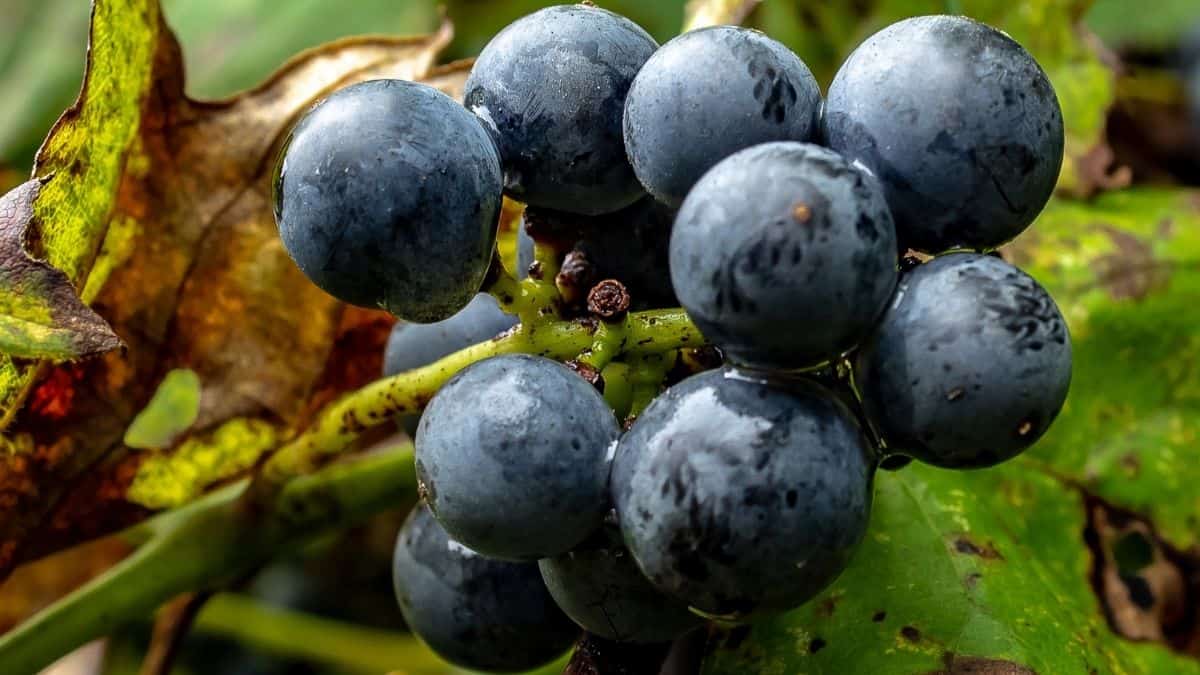
The fruit of both of these wild grapes is dark blue, almost black, and has a thick skin. But the insides are different. The inside of a muscadine is sweet and the inside of the mustang grape is tart and acidic. Foraging Texas has photos and tips for identifying mustang grapes and muscadine grapes.
The tartness of the mustang grape is what I think makes mustang grapes so wonderful for jelly and juice. But I’m not a purist and I’ll mix all the wild grapes we can find together to preserve.
Gathering Mustang Grapes
Not only is the inside of the grape acidic but the leaves have a lot of tannins in them. These tannins and acid can cause your skin to itch, so you might want to wear gloves while picking and preparing mustang grapes.
It’s easy to find mustang grapes growing along fence lines and up trees which makes them easy to forage. Just make sure that you have permission from the property owner and that you don’t pick from questionable places.

Preparing Mustang Grapes
It doesn’t matter if you are going to make jelly, juice, or wine the grapes have to be turned into grape juice first.
Once the grapes are picked, wash them thoroughly. After they’ve been washed we pull the grapes off the stems and put them in a large stockpot. with about an inch of water in it.
Once the stockpot is full turn the heat on under the stockpot to medium and put a lid on the pot. You’ll want to stir the grapes occasionally to make sure none of them stick to the bottom of the pot.
As the grapes heat up you can use a potato masher and mash the grapes a bit. Simmer until all the grapes are cooked through and it looks like a purple grape soup.
Turn the heat off and let the grapes cool down a bit.
Next you’re going to strain the solids from the juice. I do this in a few steps instead of trying to get a clear juice in just one or two strainings.

Sometimes I put colanders in large bowls and put the grapes in the colanders to strain out the large solids first. Sometimes I use our vintage metal strainers. The point is to strain the juice from the large solids in the first straining.
Then I strain the juice from the bowls through a jelly strainer. Sometimes I’ll hold a fine mesh hand strainer over the jelly strainer and get a double strain. You can also use old (but clean, of course) pantyhose.

This is the most time consuming part of preserving mustang grapes and if this is all you get done in the day its okay. You can put the juice in the refrigerator overnight and can the jelly or juice the next day. If you won’t be able to get to it the next day, put the juice in the freezer. Here are some tips for freezing in glass containers if you want to freeze them in mason jars.
I recently bought a steam juicer and it makes this process so much easier and less messy!
If you don’t want to waste the leftover grape mash, you can run it through a food mill to remove the seeds and skins. You can use the mash to make grape pie and grape jam.
Making Mustang Grape Jelly
The first time we foraged mustang grapes years ago, I called my Granny to get her super wonderful, super secret mustang grape jelly recipe. Are you ready for it? Here’s what she said…”Go buy a box of SureJel and follow the directions.”
Like most women of her generation, my Granny was super frugal and could stretch a penny til it screamed. She also knew how to do all kinds of things that are labeled “homesteading” today. She just called them skills for living. She was bit no-nonsense and believed that if you could read you were smart enough to follow written instructions without any hand holding. She was wonderful.
So every year I buy pectin to make our mustang grape jelly. I don’t always use SureGel (I later found out that my Granny called all pectin SureGel) but I do use store bought pectin. If you don’t want to use store bought pectin you can make your own from various unripe fruits. Joybilee Farm has a recipe for making your own pectin from apple skins.
In order for jelly to gel and set up properly you need to have a good ratio of juice, sugar and acid which is why recipes will tell you not to reduce the sugar or double the recipe. If you do, you run the risk of the jelly not setting. So be sure to check the instructions that are in the box of pectin.
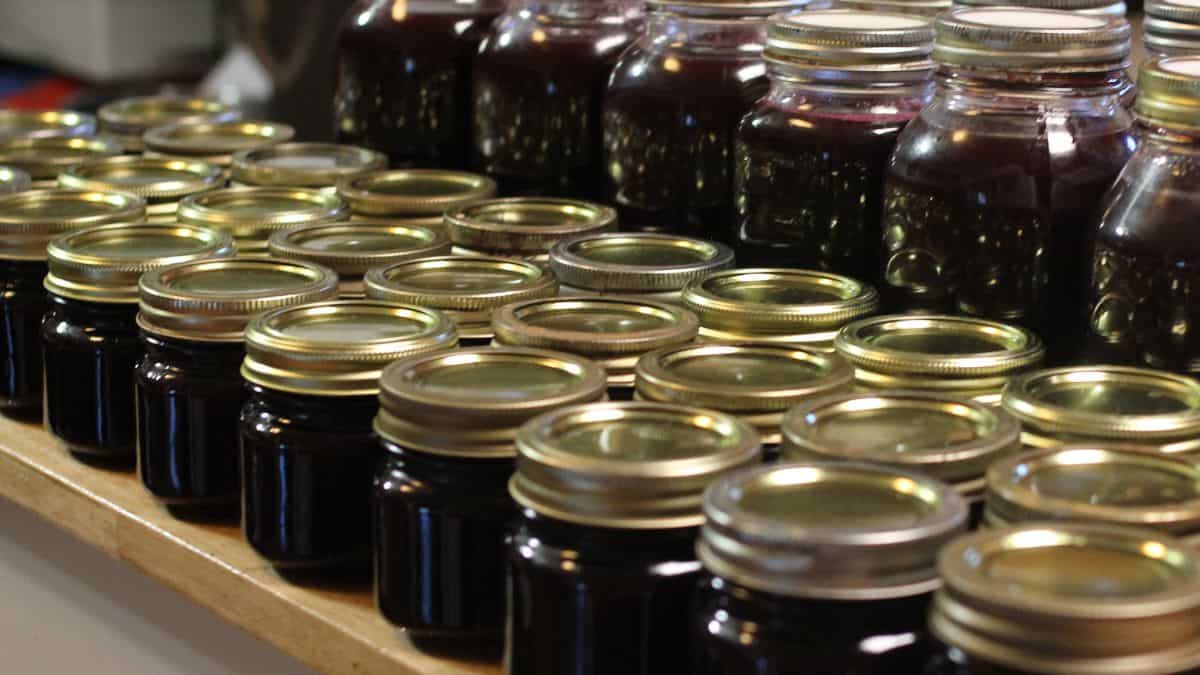
Before you start making the mustang grape jelly you’ll want to prepare your jars, lids and water bath canner. Wash the jars and lids in hot, soapy water. Fill the water bath canner about half way with water. (here are some tips for using a water bath canner)Turn the heat on under the water bath canner and put the jars in to sterilize by boiling for 10 minutes. Pints and half pints of grape jelly only needs to be processed for 5 minutes so the jars need to be pre-sterilized. If you process them for 10 minutes you don’t need to pre-sterilize them but you run the risk of the pectin breaking down and the jelly being soft. It doesn’t happen very often, but it can happen.
If you use regular store bought pectin and not a low sugar pectin the ratio for grape jelly will probably be be 5 cups grape juice, 7 cups sugar and 1 box pectin. You’ll bring the grape juice and sugar to a boil, add the pectin, then bring it to a rolling boil and boil for 1 minute.
Remove the empty jars from the water bath canner and fill with hot grape jelly mixture. Wipe the rims with a clean damp rag and put lids on the jars. Put the filled jars back into the water bath canner and bring it to a boil and process for 5 minutes (adjusting for altitude.)
After they’ve processed for 5 minutes remove the jars from the canner and put them on a towel on the counter to cool. Let them completely cool (I usually let them sit for 24 hours before I move them) then remove the lids and check the seals. If any didn’t seal put them in the refrigerator to use first. Store the sealed jars wherever you store your home canned food.
| Style of Pack | Jar Size | Elevation (feet) | Processing Time (minutes, boiling-water canner) |
|---|---|---|---|
| Hot pack | Half-Pints or Pints | 0 – 1,000 ft | 5 minutes |
| Hot pack | Half-Pints or Pints | 1,001 – 6,000 ft | 10 minutes |
| Hot pack | Half-Pints or Pints | Above 6,000 ft | 15 minutes |
Wild Mustang Grape Jelly Recipe
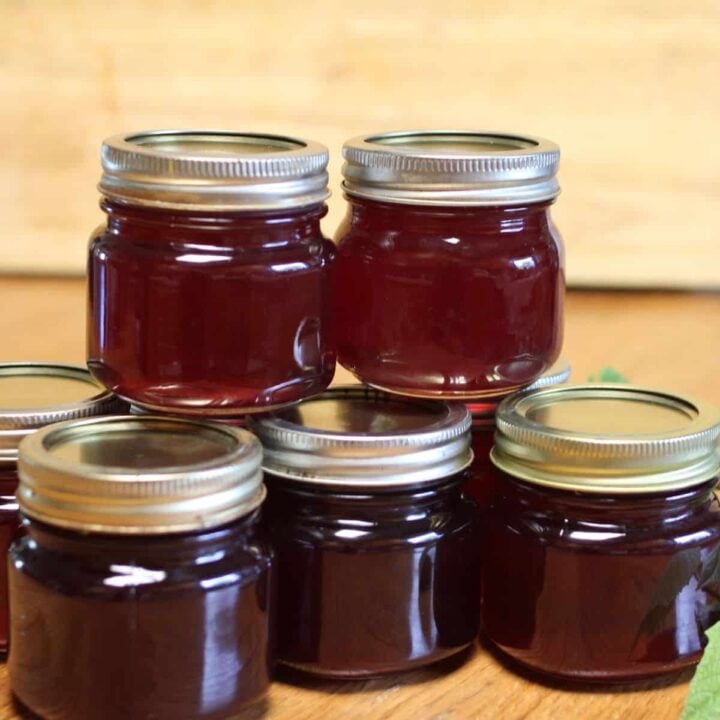
Mustang grapes are similar to muscadine grapes and fill the back roads of Texas every summer. They can be turned into delicious mustang grape jelly, juice, jam, and even pie filling. You can use this same process for any wild or domestic grapes.
Ingredients
- 5 cups mustang grape juice
- 7 cups granulated sugar
- 1 box pectin
Instructions
Prepare the equipment
Wash the jars, lids, rings and water bath canner in hot soapy water. Set the lids and ring aside. Fill the canner about halfway with hot water. Put the jars in the canner to keep them hot. The water should cover the jars by an inch.
Put the canner on the stove over high heat. Bring to a boil and boil for 10 minutes to sterilize the jars.
Canning the jelly
Measure out 7 cups of sugar into a medium bowl and set aside.
In a large stockpot, combine grape juice and pectin.
Bring to a full rolling boil - will not stop bubbling even when stirred.
Once boiling, add sugar all at once - stir well to combine.
Bring back to a full rolling boil and boil rapidly, stirring constantly for 1 minute exactly.
Remove from heat and skim off any foam.
Remove one jar from the canner and ladle the hot jelly into the jar, leaving 1/8-inch headspace.
Put a lid and ring on the jar and tighten fingertip tight. (don't crank it down)
Place the jar back in the canner and fill the next jar.
Once all the jars are filled, make sure the water covers the jars by 1 to 2-inches.
Place the lid on the canner and bring to a boil.
Gently boil for 10 minutes.
Turn off heat, remove the canner lid and let the jars sit for 5 minutes.
Carefully remove jars from canner and place upright on a towel-lined countertop or cooling rack and allow to cool completely – 12 to 24 hours.
Remove the bands and check the seals. The lids should not have any give to them. You should be able to pick up the jar by the lid and the lid should stay on.
Label and store the sealed jars. If any jars failed to seal, put them in the refrigerator to use first.
Notes
Adjust for Altitude for Half-Pints and Pints
0-1000ft 5 minutes
1001-6000ft 10 minutes
over 6000ft 15 minutes
Nutrition Information:
Yield: 8 Serving Size:Amount Per Serving: Unsaturated Fat: 0g
Frequently Asked Questions
Mustang grapes and muscadine grapes are related wild native grapes but they’re not the same plant. The easiest way to tell them apart is by the leaves — mustang grape leaves are green on top and gray and fuzzy underneath, while muscadine leaves are green on both sides and smooth. The fruit is also different on the inside: muscadine grapes are sweet, while mustang grapes are intensely tart and acidic. For jelly making, mustang grapes’ tartness is actually an advantage — it gives the jelly a bold, complex flavor. I’ll often mix whatever wild grapes I find together and the results are always wonderful.
Technically yes, but most people find them too tart and acidic to enjoy raw. The inside of the grape is very sour compared to store-bought grapes. They’re best used for jelly, juice, jam, or wine where the sugar balances the tartness. The skin also contains a lot of tannins that can cause skin irritation in some people, which is why wearing gloves when picking and preparing them is a good idea.
In Texas, mustang grapes typically ripen in June and July. The ripe grapes turn dark blue to black and pull away from the stem easily. You’ll find them growing along fence lines, roadsides, and up into trees throughout Texas and much of the state. In other regions wild grapes ripen later — often August through September in the Southeast and Midwest.
The leaves and fruit of mustang grapes contain oxalic acid and tannins that cause skin irritation in many people. The reaction ranges from mild tingling to a rash. Wearing gloves when picking and handling the grapes and washing your hands thoroughly afterward takes care of it for most people. The acid cooks off during the juice-making process so the jelly itself is perfectly fine to eat.
Yes — several readers have had success with low-sugar Sure-Jell using 5½ cups juice and 3½ cups sugar. That said, mustang grapes are extremely tart, and reducing the sugar significantly can result in a very sharp jelly. If you use a low-sugar pectin, follow the directions on that specific box and consider using the higher end of any suggested sugar range to balance the natural tartness of the grape.
Absolutely — a steam juicer is actually the easiest way to extract mustang grape juice. It skips the stovetop simmering and straining steps entirely, producing clear juice in less time with far less mess. If you make mustang grape jelly or juice regularly it’s worth the investment.
Properly sealed and stored in a cool dark place, home canned mustang grape jelly will keep for up to 2 years. The USDA recommends using home canned goods within a year for best quality, though they’re safe beyond that if the seal is intact. Once opened, store in the refrigerator and use within a few weeks.
Yes, with one adjustment — mustang grape juice is much more tart and acidic than commercial grape juice, so recipes designed for store-bought juice may need slightly more sugar or a reduced amount of added lemon juice. Follow the recipe on your pectin box and use the grape juice quantity it specifies; your jelly will just have a bolder, more intense flavor than commercial grape jelly

Angi Schneider is the author of The Ultimate Guide to Preserving Vegetables and Pressure Canning for Beginners and Beyond, both published by Page Street Publishing. She has taught canning classes for 177 Milk Street, been featured in Serious Eats, and written for Countryside Magazine. Angi has been sharing gardening, preserving, and simple living skills since 2010.
I used to pick wild black berries each summer. My mom would can them for cobblers, make jelly, and make syrup. I use to pick wild strawberries too; but these didn’t last long enough to preserve. I really miss living in an area where wild fruit grows. But, I can’t complain because we get our fair share of pecans each year.
I love being able to forage wild foods. All the benefits of harvest without the responsibility of growing them. Do you guys grow the pecans? We have 2 trees on our property and right now they have little pecans on them. Hopefully we’ll have a good harvest this fall.
I have always picked wild grapes in Vermont. Ours will not be ready until end of Aug. I have always made jelly, but never juice. Thanks for the idea and “how to”
Kathi
We love wild grapes! Last year was the first year we picked a bunch and made juice and jam. They are ready in the fall here in NY.
I’m stopping by from the Homestead Blog Carnival. I look forward to reading more on your blog.
Thanks, Jen. Aren’t wild grapes just the most flavorful for juice and jelly? How fun to be able to harvest in the fall when it’s cooler.
Whats a jelly strainer?
It’s a mesh bag on a tripod thing. Here’s a link to one, http://amzn.to/2uc3K7U. You could use an old pillow case or cheese cloth too.
I know this is an old post but I just discovered it while looking for something related.
That’s too much work, taking off stems, boiling, skimming, and all of that. Have you ever heard of a steam juicer? That gets you all of the juicy goodness without filtering and delay. You can literally pick, wash, steam juice, and make your jelly in the same afternoon. And always wear gloves when working with Mustang grapes, they’re really acidic.
I steam frozen strawberries before making jelly, I steam juice home grown tomatoes to make juice and sauce, etc. Someone has a Pinterest page with lots of images of steam juicing: https://www.pinterest.com/Luvcookin1/steam-juicing/
Thanks for the recommendation! I have heard of steam juicing but haven’t looked into it. I will now.
@MD,
Thanks for the info about a Steam Juicer I am going to look into this. It funny how acidic Mustang Grapes are but yet they dont bother my skin at all when picking or handling them nor do the leaves.
@Angi Schneider, Can you use a regular juicer to peel, seed and juice the grapes?
I’ve never used one but I don’t see why it wouldn’t work!
How many pints does the jelly recipe yield?
It makes about 8 half pints so about 4 pints.
Thank you ! We picked our grapes this morning and I’m about to cook them down to see how much juice we have. We have lots more grapes on the vine if we need them.
Thanks so much for this tutorial and recipes! I have a bunch of the low sugar pectin. Would that work for the jelly? Just didn’t want to have to buy more, since I have at least 6 boxes already at home.
Thanks again,
nora
Hey Nora, I would try a box and see what it’s like. Follow the directions on the box for how much sugar and juice to add. If there is a range for sugar, use the higher amount because mustang grapes are quite tart. I bet it will be good!
I always use the low sugar Sure Jel, no problem with it setting! I don’t care for too much sugar! 5 1/2 cups juice 3 1/2 cups sugar!
That’s great! I use low sugar Sure Jel for some jelly recipes but not mustang grapes – they are extremely tart and tannic.
Please let me know what I can use leftover mustang grape juice for. Made the jelly… delish…and have 1 1/4 cups left. Don’t want to throw it out.. too much work In getting it!!!!! Got chewed up by some awful bugs.
Thanks…. This jelly is devine
So glad you love the jelly, it’s definitely our favorite. I like to take the leftover juice and add a little sugar to it (you might need to heat the sugar in water to make a syrup so it dissolves better in the juice). We like to add a little bit (about 1/4 cup) to sparkling water as an afternoon treat.
Can you use a pressure canner instead of water bath?
You can, but you need to use it as a water bath canner by filling the pot so that the water is at least an inch above the jars and not locking the lid.