




Dehydrating apples is one of the easiest and tastiest ways to preserve your harvest. Whether you like chewy rings or crisp apple chips, the process is simple and the results are perfect for snacking, baking, or tossing into oatmeal.
In this guide, I’ll walk you through the step-by-step process for dehydrating apples, cover different methods (dehydrator vs. oven), share troubleshooting tips, and explain how to store them for long-term freshness.
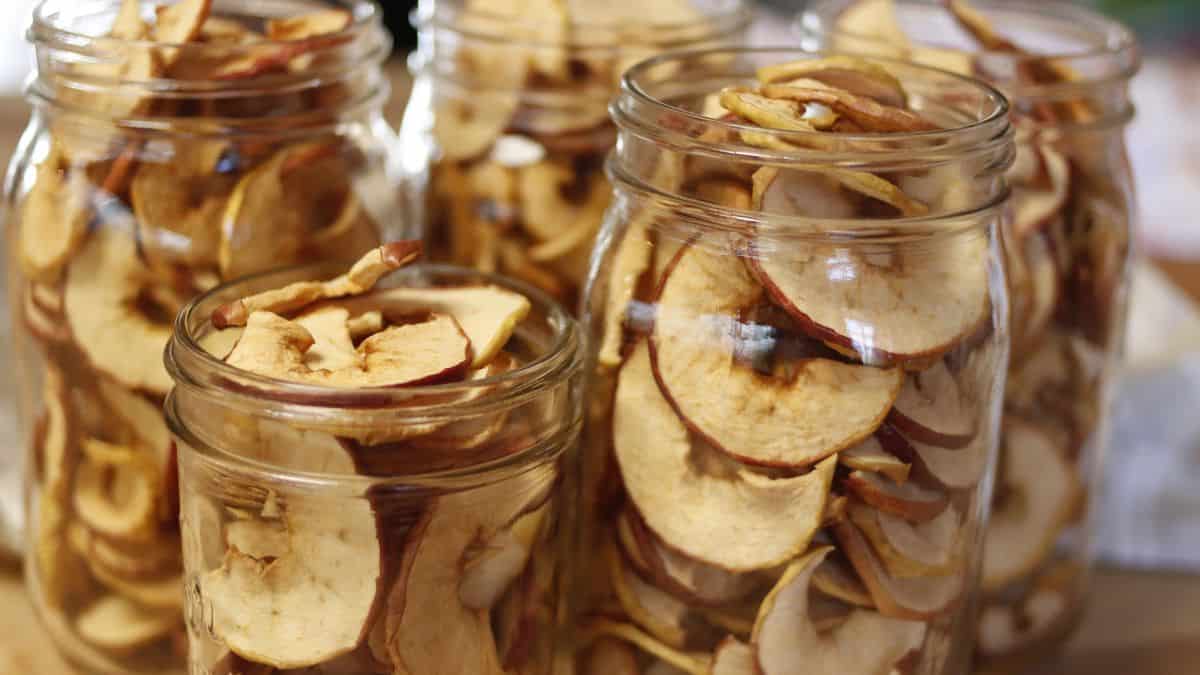
Quick Tips for Dehydrating Apples (At A Glance)
- Best temperature: 135°F (57°C)
- Slice thickness: 1/8 to 1/4-inch
- Drying time: 6–12 hours, depending on thickness & humidity
- Texture guide: Leathery for rings, crisp for chips
- Storage: Airtight jars, vacuum bags, or freezer for long-term
Preparing Apples for Dehydrating
Regardless of the method you use to dehydrate apples, the preparation is the same. Start with apples that you know you like and that are not bruised or mushy (save those for apple sauce).
- Wash apples
- Peel, if desired. I don’t peel the apples we dehydrate but you can if you want to. The peel tends to get hard when dehydrated, which is why some people peel them.
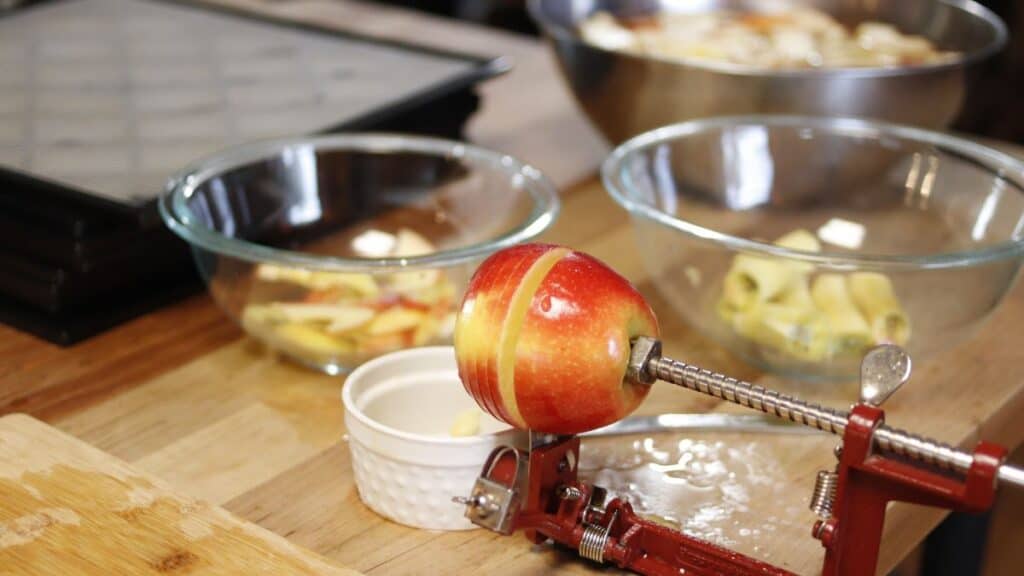
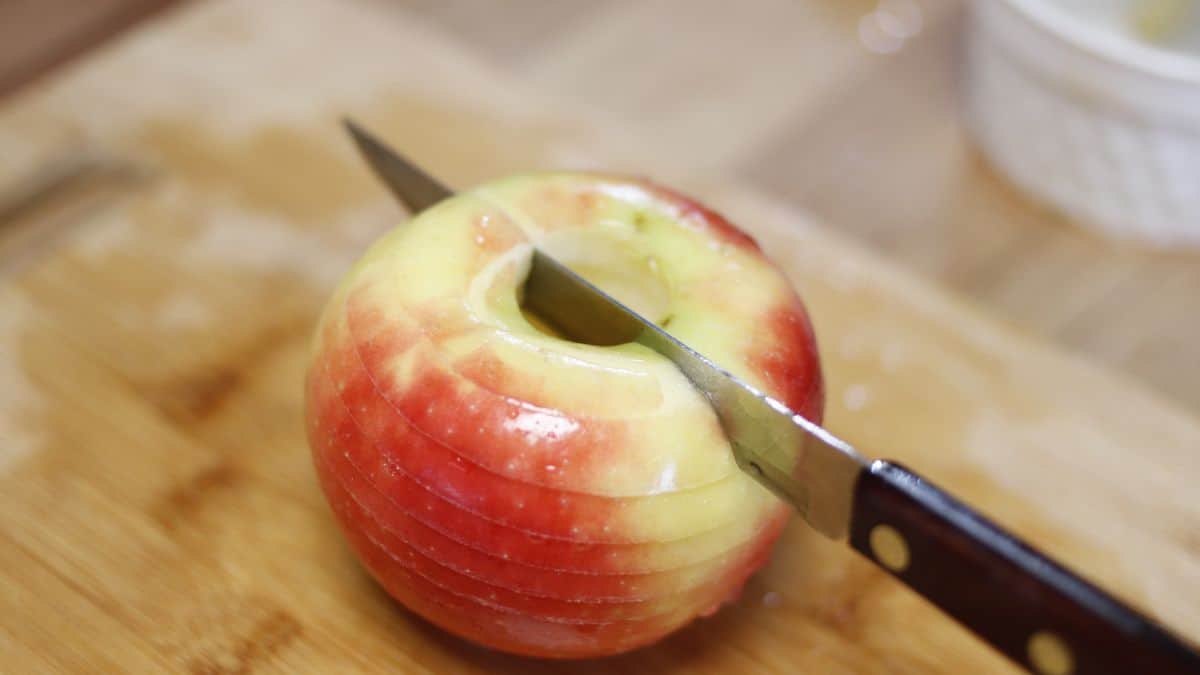
- Core apples and slice evenly. An apple corer/slicer works great or you can use a mandolin to get even slices after you core the apple. A simple kitchen knife works just fine too, don’t think you have to have special tools to slice apples for dehydrating.
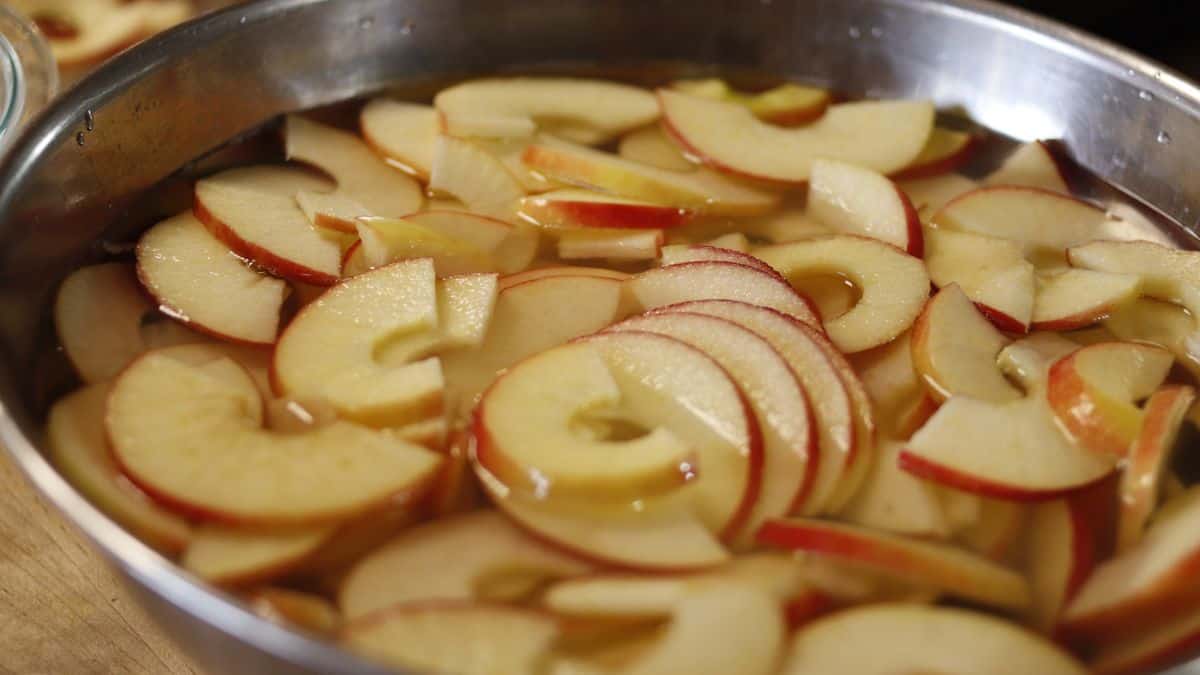
- (optional) Dip slices in lemon water (1 tbsp lemon juice per 1 cup water) to keep them from browning. Sometimes I do this and sometimes I don’t. Just like dehydrated bananas the apples turn brown if you don’t but they taste just fine and are fine to eat.

Methods for Dehydrating Apple Slices
When it comes to drying apples, there’s more than one way to do it. While a dehydrator is the most reliable method, you can also use your oven or even try traditional sun-drying if your climate allows. Each method has its pros and cons—this quick chart will help you decide which one works best for you.
| Method | Temperature | Time | Pros | Cons |
|---|---|---|---|---|
| Dehydrator | 135°F (57°C) | 6–12 hours | Even drying, best flavor & color, energy efficient | Requires special equipment |
| Oven | 170–200°F (lowest setting) | 2–4 hours | No extra equipment, faster than dehydrator | Uneven drying, higher risk of browning, uses more energy |
| Sun-Drying | Ambient (85°F+ with low humidity) | 1–3 days | Traditional method, no equipment needed | Weather dependent, risk of spoilage, inconsistent results |
Dehydrator
- Lay the apples on the dehydrator trays – don’t overlap them, but put them close together. You can sprinkle with a cinnamon sugar mix if you want to.
- Dehydrate apples at 135°F for 6-12 hours depending on thickness and how humid it is – see chart below.
- Rotate trays halfway through the drying time to ensure even drying.
- The dehydrated apple rings are done when they feel leathery but not crispy. If you like dried apple rings that are more like apple chips just keep them in the dehydrator longer.
| Slice Thickness | Approx. Drying Time | Texture Result |
|---|---|---|
| 1/8 inch | 6–8 hours | Crisp chips |
| 1/4 inch | 8–10 hours | Leathery rings |
| 3/8 inch | 10–12+ hours | Chewy slices |
Oven Drying
Yes, you can dehydrate apples in the oven, just know that the apples will be darker than when using a dehydrator and they might not dehydrate evenly.
- Set oven to lowest temp (usually 170–200°F).
- Place slices on parchment-lined baking sheets. If you have a cooling rack that you can put the apple slices on and put it over the baking sheet, that’s even better.
- Keep door propped open slightly to allow moisture to escape.
- Dry 2–4 hours, flip halfway.
Sun Drying
Sun-drying is the oldest method for dehydrating food but it requires the certain conditions to ensure safety. To successfully use the sun for drying apples, you’ll need consistently warm temperatures (at least 85°F), low humidity and direct sunlight.
- Lay apple slices on a mesh tray and cover with a mesh cloth or lightweight fabric (to keep insects off)
- Time required: 1-3 days depending on temperature and humidity. Be sure to bring trays in a night to keep dew from getting on them.
- Tips: Sun drying works best in hot, arid climates. If you live in a cool or humid climate, sun drying apples probably isn’t the best option as they may spoil before they’re fully dry.
For most people a dehydrator or oven is a much more reliable way to dry fruit at home.
How to tell when the dried apples are done
The apples need to be fully dry before storing.
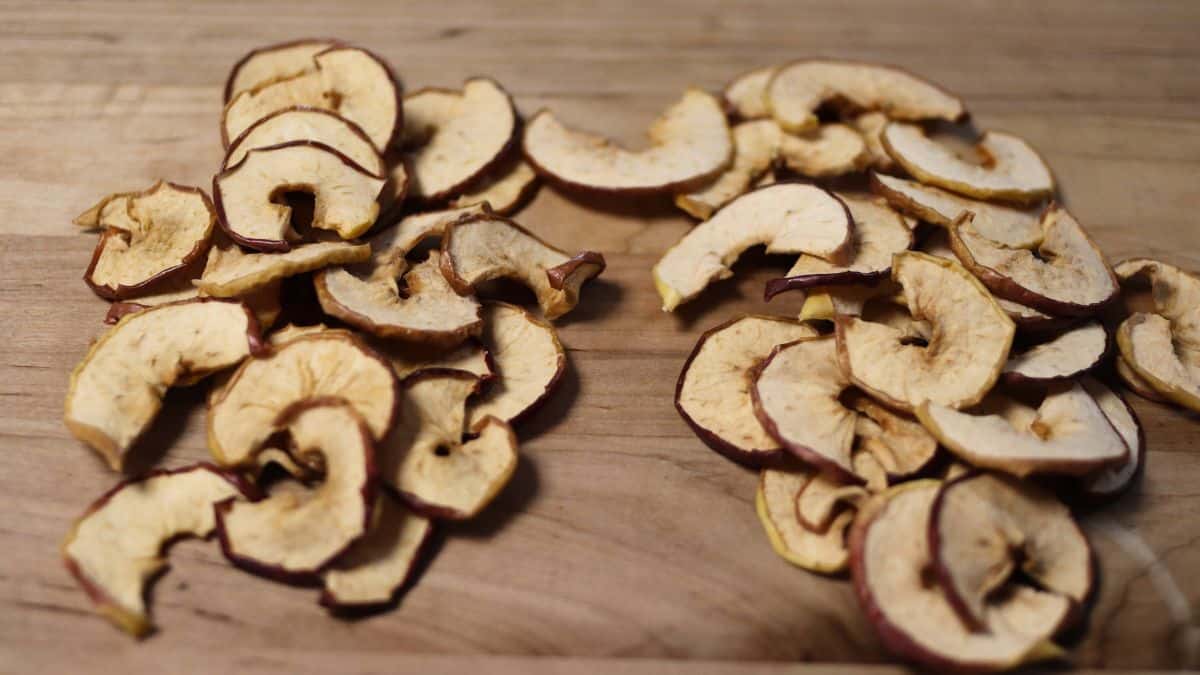
- For chew apple rings: The apples should be leathery and bendy. No moisture should should bead up when bended.
- For apple chips: The dried apples should be crisp and snap when they’re bent.
Storage & Shelf Life
Before storing, all dehydrated fruit should be conditioned to avoid mold forming. Here’s what the National Center for Home Food Preservation recommends.
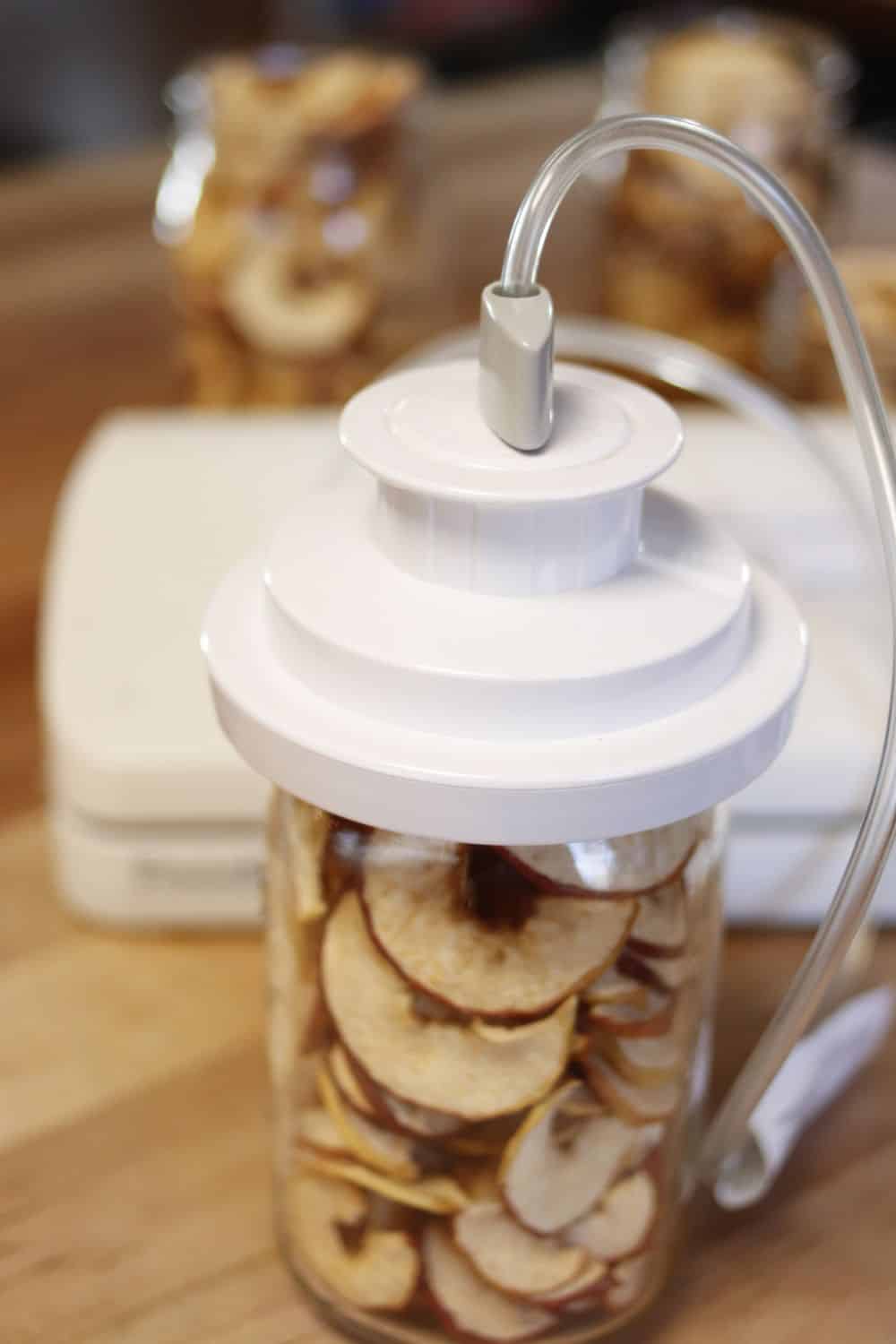
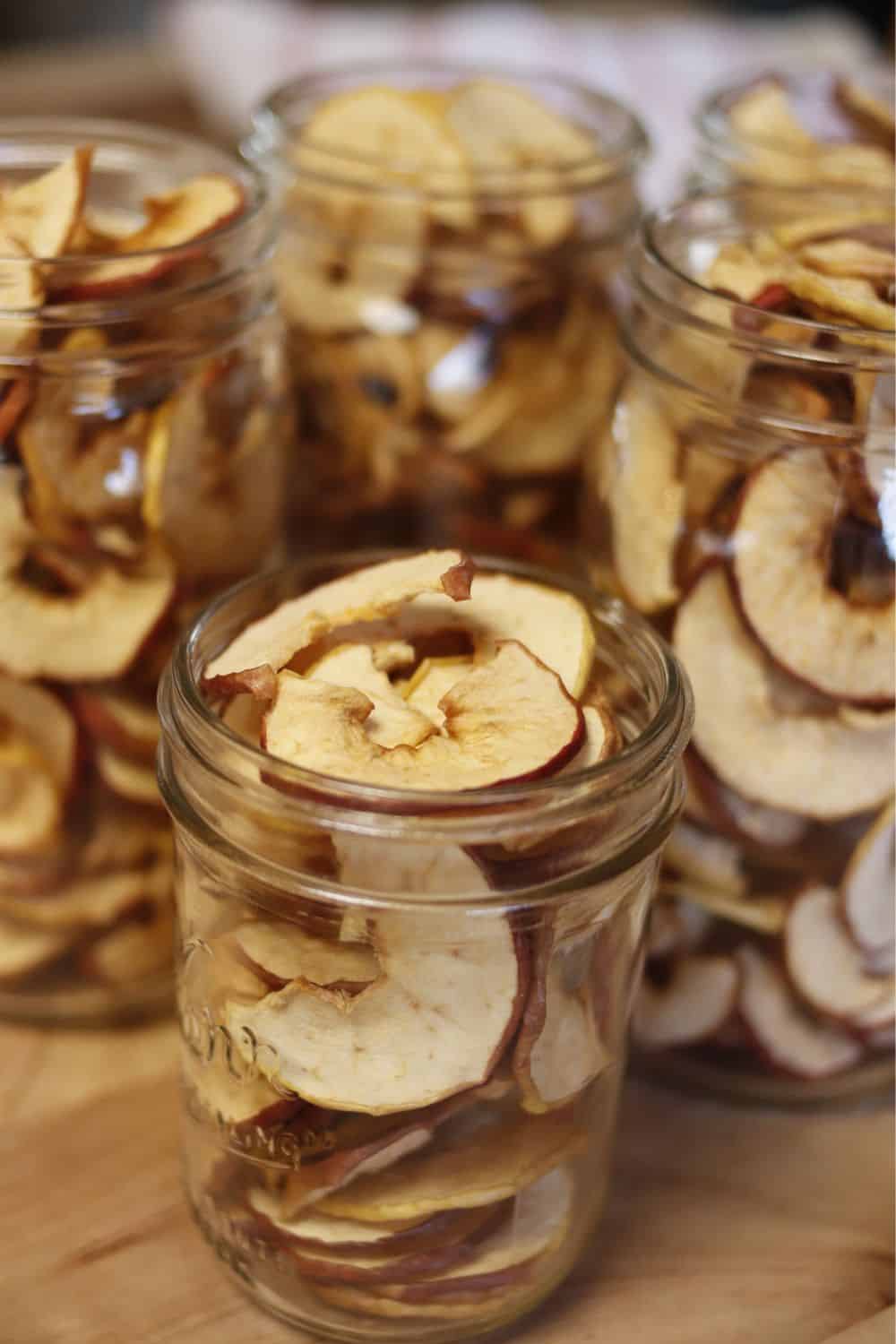
To condition the fruit, take the dried fruit that has cooled and pack it loosely in plastic or glass jars. Seal the containers and let them stand for seven to ten days. The excess moisture in some pieces will be absorbed by the drier pieces. Shake the jars daily to separate the pieces and check the moisture condensation. If condensation develops in the jar, return the fruit to the dehydrator for more drying. After conditioning, package and store the fruit.
- Short-term: Store in airtight jars at room temperature.
- Long-term: Vacuum-seal or freeze for up to 1 year.
- Keep in a cool, dark place away from humidity.
Pro Tip: Check monthly for any moisture in dried fruit. If you notice any moisture, put the apples back in the dehydrator until dried.
Troubleshooting & FAQ
Why are my apple slices sticky?
If your dried apple slices are still sticky, they aren’t dry enough. Leave them in the dehydrator longer until the stickiness is gone.
Why are my apple chips brown?
Apple oxidize when they’re exposed to air. It doesn’t change the flavor or safety but it can be unappetizing. You can pretreat the apples with lemon water (see preparation section above) to help apples retain their color.
Do I have to peel apples before dehydrating?
No – however, the peel can get chewy and tough, so if you’re looking for a apple ring that’s more like store-bought, you’ll want to peel them.
Why are my apple chips bland?
It’s probably the apple variety. In the future try a sweeter variety such as Fuji, honeycrisp or gala. That being said, Granny Smith apples make very flavorful dried apples.
Will home dehydrated apples taste like store bought dried apple chips?
Nope, probably not. But reproducing something you can buy isn’t the goal. Preserving the harvest or making healthy snacks for your family is the goal. Different doesn’t have to be bad or good, it can just be different and home dried apples taste different and have a different texture than store bought dried apples.
What if I over dry my dehydrated apples?
No worries, just add a damp cloth to the bottom of the dehydrator and let them absorb some of the humid air, they’ll soften up. But you might find that you like the crispier dried apples as much or even more than the softer dried apples.
Why would dehydrated apples lose crispness over time?
Apples are high in natural sugars, which attract moisture. If they’re not fully dried or if they’re stored in humid conditions, they’ll soften or become sticky. Using airtight containers and ensuring apples are completely dry before storage helps prevent this.
How long do dehydrated apples last?
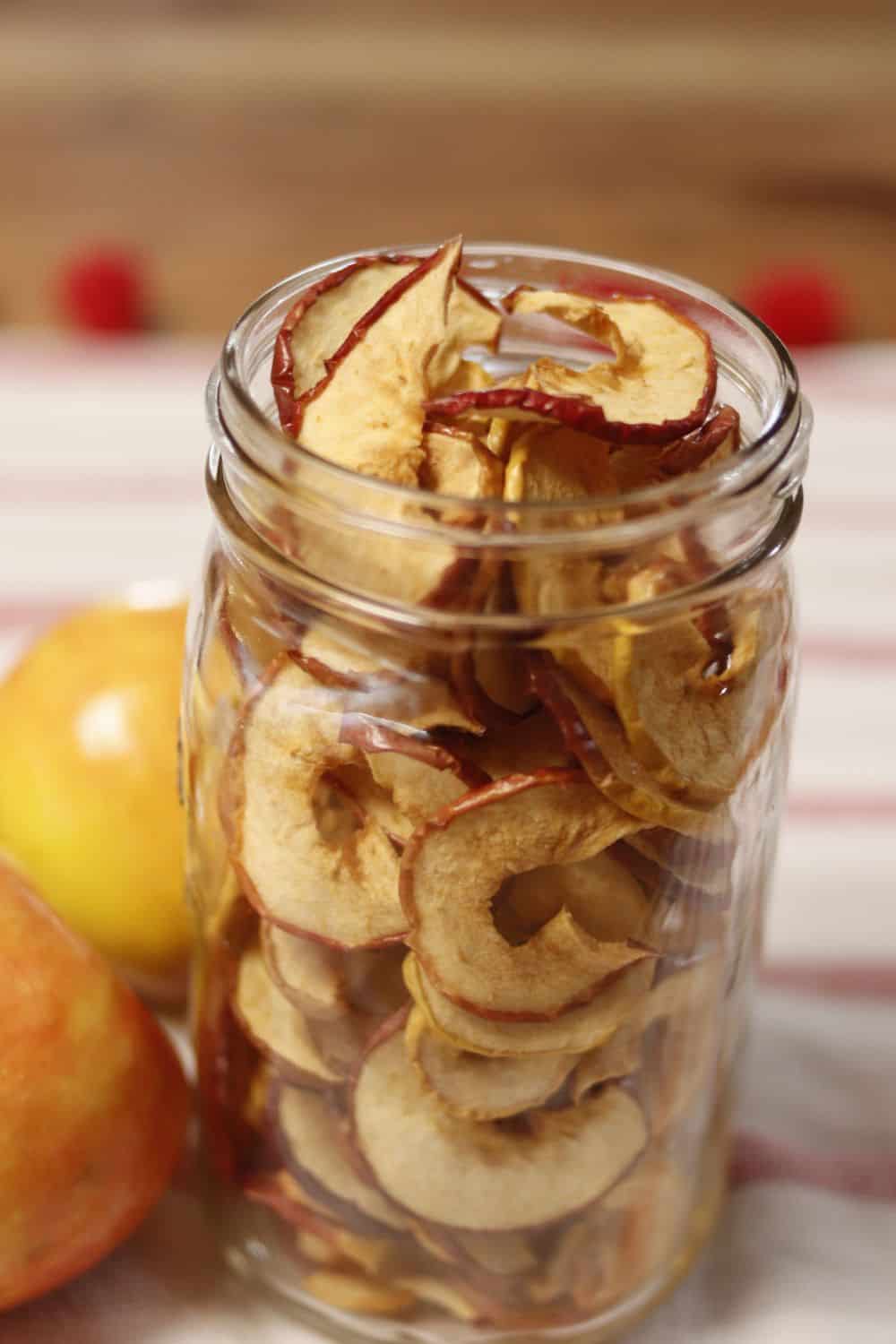
Fully dehydrated apples should stay fresh for up to six months but we’ve never had them last that long. You can keep them in the freezer to store longer or if you think they’re not completely dehydrated.
How much dehydrated apples will I get from fresh apples?
If you have 5 pounds of fresh apples you’ll be able to fill about 2 quart size mason jars with dehydrated apple rings. Although these are so very good, I’m not sure that economically they are the best investment as my children can eat a mason jar of dried apple rings in about 1 minute!
However, if I had access to some really cheap or free apples, say from my own tree, this would be a great way to preserve them for the summer.
What do I do with the apple cores and skin from dehydrating apples?
Personally, I just leave the skin on when dehydrating apples but if you remove it you’ll need to do something with it. You can use the skin and cores to make apple cider vinegar.
How to use dehydrated apples
We like dehydrating apples to snack on but there are many other uses for dehydrated apples. They can be chopped and used in oatmeal, muffins, or even cookies, like these maple dried apple cookies.
Dehydrated apples can also be added to tea or ground to make a sweetener.
Dehydrated apples can be reconstituted by soaking in water or apple juice and used in pies or other baked goods.
Dehydrating apples is one of the simplest preservation projects you can do. With just a few apples and a little time, you’ll have jars of sweet, tangy snacks that last all year.
For more easy food preserving ideas check out my other food preserving recipes.
Tried this recipe? Please leave a ⭐️⭐️⭐️⭐️⭐️ star rating in the recipe card below and/or a review in the comment section further down the page. We always appreciate your feedback. You can also save the recipe for later by pinning it or clicking on the heart in the lower right hand corner.
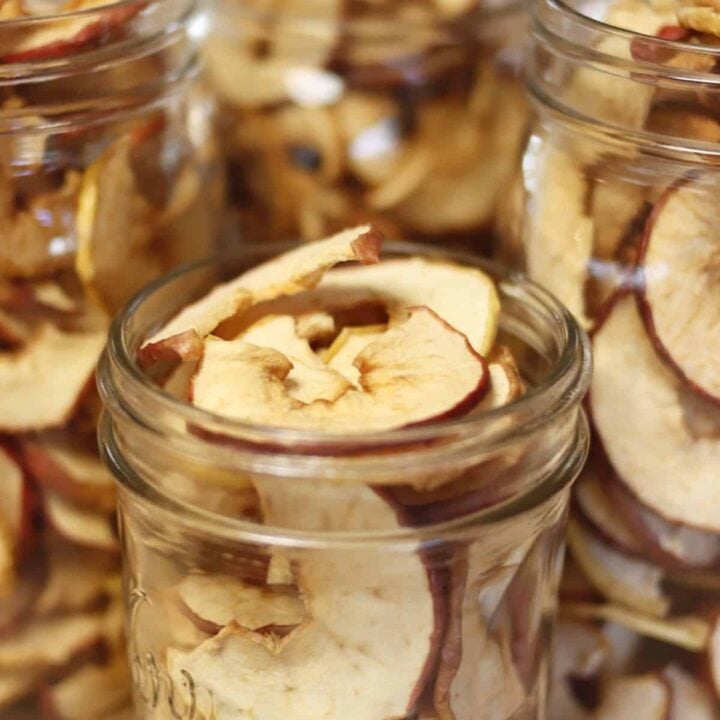
Home Dried Apple Rings and Apple Chips Recipe
Dehydrating apples at home is easy do to in a dehydrator or oven. Dehydrated apples make a healthy snack and is a great way to store apples for the winter. Dried apples can be used in from scratch cooking and baking.
Ingredients
- Apples
- Lemon juice, optional
- Cinnamon, optional
Instructions
Peel the apples if you want or just scrub them with a little apple cider vinegar to get the wax off.
Core the apple and slice into 1/4-inch slices.
Dip the apples in some water with lemon juice added - 1 tablespoon lemon juice for each cup of water.
Lay the apples on the dehydrator trays - you can sprinkle with a cinnamon sugar mix if you want to.
Dehydrate apples at 135°F for about 10 hours. If you want crispier apple chips, just dehydrate longer.
Put the dried apples in a container with a lid. Shake the container every day for 7 days and check for moisture. If any moisture develops, put the apples back in the dehydrator.
Store dehydrated apples in an airtight container for up to six months. Vacuum seal for storage up to a year.
Notes
For Oven Drying:
Place sliced apples on an oven safe wire rack on top of a baking sheet. If you don't have a wire rack, line the baking sheet with parchment paper. Put the baking sheet in the oven and turn it on it's lowest setting (175-200°F), you might want to keep the oven door ajar to let some of the heat out. Bake for 2-4 hours. If you aren't using a wire rack be sure to flip each apple slice at the halfway mark.
For Sun Drying:
Place apple slices on a mesh tray and cover with mesh or lightweight fabric to keep insects off. Leave the trays outside for several day, bring them in at might, until they're fully dry. They will not get as crisp as they will in a dehydrator or oven.
Nutrition Information:
Serving Size:Amount Per Serving: Unsaturated Fat: 0g

Angi Schneider is the author of The Ultimate Guide to Preserving Vegetables and Pressure Canning for Beginners and Beyond, both published by Page Street Publishing. She has taught canning classes for 177 Milk Street, been featured in Serious Eats, and written for Countryside Magazine. Angi has been sharing gardening, preserving, and simple living skills since 2010.
This site is the best I have no experience and you make it very clear and simple. Thank you
Thanks for the sweet words, Julie. Simple living should be…well, simple. I’m glad my site is helpful to you.
I love your site. You answer every one of my questions almost as I’m thinking it. Keep up the great ideas! Thank you
Hi Lorraine, Thanks so much! I’m glad you find the site helpful. I can talk gardening and food all day long…lol.
I’m diabetic so I sprinkle mine with cinnamon and Splenda. I use the peels and cores to make jelly. nothing goes to waste.
Those are great suggestions, Daryl. Thanks so much for sharing!
I aim to buy a dehydrator today to make some dried apples for making Old Timey Apple Stack Cakes!
My friend INSISTED that drying apples “naturally” makes better tasting dried apples.
But, thanks to you, I have finding that keeping the fruit at a controlled temperature is best. ( I wish that I could get her to admit that it’s OKAY to use a dehydrator! Ha)
Hey Maggie, my Granny used to always say, “A person convinced against his will, is of the same opinion still.” LOL It’s totally okay to use a dehydrator and will give you more consistent results and with less risk of bugs getting into them and of them molding. But if drying them “naturally” works for your friend, more power to her. I know you’ll enjoy your dried apples!
Thank you for the info I’ve had dehydrater for years only used it for beef jerky.until this summer .been drying some fruit now I’ll do apples.thank you
You’re welcome! I’m glad your getting more use from your dehydrator this summer, that’s super exciting!
Just finished putting apples in my dehydrator, first time using it, thanks for all the info you provided, it was very helpful. I might even try zucchini’s tomorrow.
You’re welcome! I’m glad it helped. You should try the zucchini. I love having dried zucchini on hand for winter soups.
if I don’t have a dehydrator and my oven only goes down to 180, how long would you recommend leaving them in the oven to get the best results? Thank you
Hi Donald, probably 5-8 hours. Just be sure to leave the door open a bit and check on them regularly.
Does it matter how many apples you use, because you didn’t give exact measurements?
HI Naia, You can do one apple or as many as will fit in your dehydrator. It’s up to you. This is really a process, not a recipe.
I love Apple chips and make them every year! I use the end prices of dried apples and put them in a coffee grinder and make apple powder. My family loves it. We add a spoonful to oatmeal or sprinkle it on Buttered Popcorn, muffins just about anything. My Husband makes Apple Martini’s and dips the rim of the glass in apple powder!
What great ideas! Thanks so much for sharing, I can’t wait to try some of these.
I’m new to canning and other alternative ways of preserving food, so anything along those lines would be greatly appreciated..Thanks
Hey Charlene, besides the information on my site, I’ve written two books on preserving food, The Ultimate Guide to Preserving Vegetables and Pressure Canning for Beginners and Beyond. Both have step by step instructions and lots of recipes.
I soak my apple slices in 7up or Sprite. It has acid in it to control the browning without the sour lemon taste. I have used this for years on the Nesco dehydrator. I set my dehydrator to 165 and have never had an issue of ‘cooking’ the apples before they are dried.
I sprinkle ground cinnamon on the slices prior to dehydrating.
Thanks for sharing your experience. The little bit of lemon juice in the water really doesn’t leave a sour.