
We have a Meyer lemon tree in our yard that gives us more lemons than we can possibly use fresh. Most years that means hundreds of pounds of lemons coming off the tree over the course of a few months. I’ve learned to preserve them every way I can – freezing, fermenting, and dehydrating – so we have lemon in some form available all year.
Dehydrating is my favorite method because of how many different things you can make: dried lemon slices for tea and water, zest for baking, lemon powder for seasoning, and lemon salt and lemon sugar that are genuinely useful pantry staples. This post covers all of them, plus oven and air fryer instructions for anyone who doesn’t have a dehydrator.
One note before you start: if you’re using the peel for any of these recipes, buy organic. Conventional lemons are treated with wax and pesticides that stay in the peel. For crafts-only use, conventional is fine.
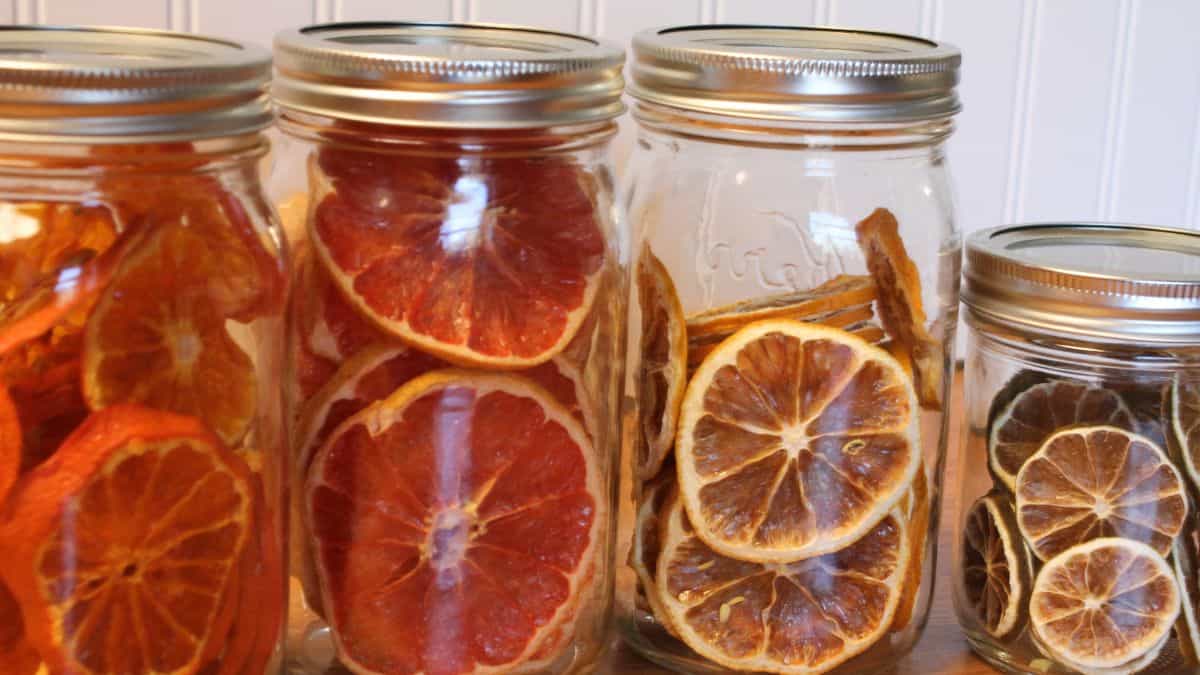
What Makes Dehydrating Lemons So Worth It
- One lemon tree – or one good sale at the store – turns into a year’s worth of lemon zest, lemon powder, lemon salt, and lemon sugar with just a few hours of hands-on time.
- Unlike freezing, dehydrated lemons don’t take up freezer space and don’t need thawing – they’re shelf stable for up to a year in a sealed jar.
- Dehydrated lemons retain pretty much all their vitamins and minerals and are just as good for you as fresh lemons.
- You end up with more useful forms of lemon than you can buy at any grocery store: powder, flavored salt, flavored sugar, and dried slices are all things that would cost a lot more to buy than to make.
- The whole process is more forgiving than most preserving projects – lemons don’t require blanching, pressure canning, or precise timing. If in doubt, just dry them longer.
I like to keep a list of all the food I preserve using these worksheets. You can get a copy emailed to you by filling out the form below.
How to make dried lemon slices
- Depending on where you get your lemons they may have already been washed or they may have dirt and bird droppings on them. So be sure to check them and wash the lemons if necessary.
- You want fairly thin, fairly uniform slices. I’d say mine are about 1/4″ thick. I used a deli knife with a guard on it, you could use a mandolin if you have one or just your regular knife, it doesn’t have to be super exact.
- Remove any seeds before dehydrating, especially if you’re planning to make lemon powder. Seeds don’t dehydrate well and add bitterness. For slices used as garnishes or in water and tea, seeds are less critical but still worth removing.
- Lay the lemon slices on the dehydrator rack. It’s okay if they touch, so put them close together.
- Dehydrate the slices on low or at 125°F degrees for about 16-18 hours.
- Check the lemons every once in a while and rotate the racks if needed so that they dry evenly.
- The slices should easily snap in half when they’re fully dry.
A note on temperature: you’ll see different recommendations across dehydrating resources – anywhere from 100°F to 140°F. I use 125°F because lower heat preserves more of the lemon’s color and flavor compounds. Higher temperatures (135-140°F) will work and dry the slices faster (8-12 hours vs. 16-18 hours at lower heat), but the slices will darken over time more noticeably. Either approach is fine – it depends on what you’re using them for. If you’re making decorative slices or cocktail garnishes where color matters, go low and slow. If you’re making powder or lemon salt where appearance isn’t the point, higher heat is more efficient.
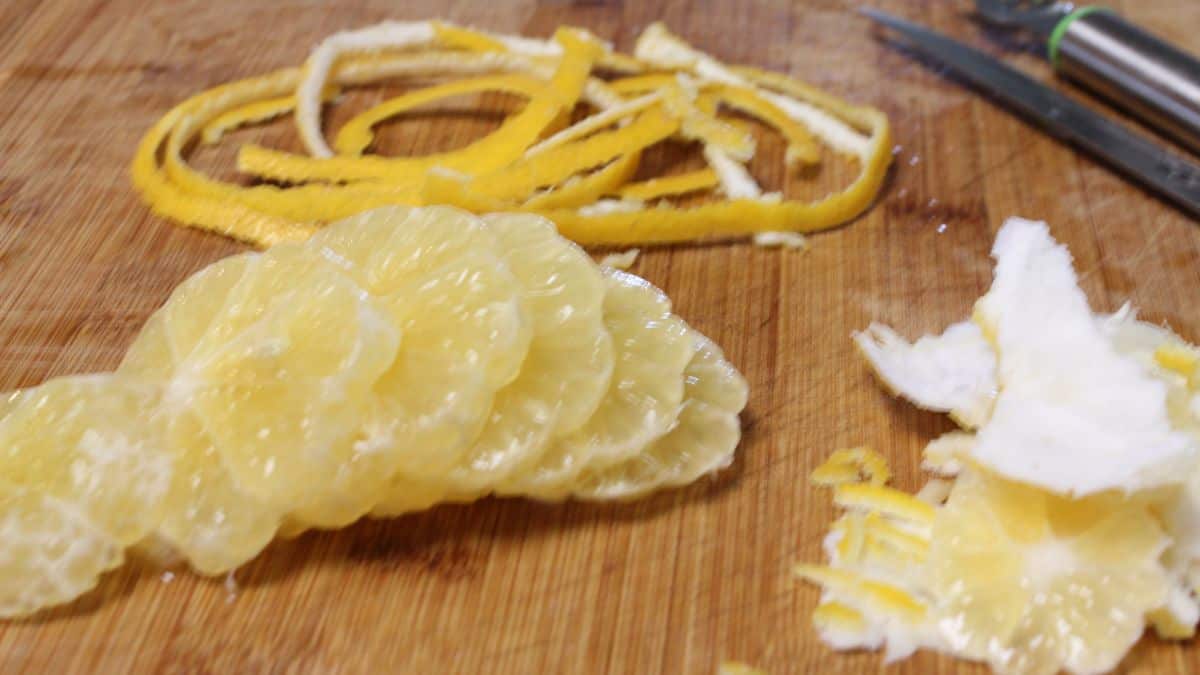
You can also peel the lemon before slicing it or peel some of the lemon slices before dehydrating. This will give you some lemon slices without the peel and pith which will be useful if you want to make lemon powder.
Can you dehydrate a whole lemon?
Yes…but, you’ll need to cut wedges out of the sides. You can use a knife to cut small wedges out of the sides, leaving the stem and flower ends intact. It will look kind of like an Chinese lantern.
These look nice on a dried citrus garland or as decoration for fall and winter.
Just know that they’ll take a longer to dehydrate, about 18-24 hours.

How to make dried lemon zest
More than dried lemon slices I like to make dried lemon zest because I think there are more uses for it. Before we juice any lemons we zest them. It really doesn’t take much time and ensures that we’ll have plenty of dried lemon peels to use.
- To zest citrus you’ll want a zesting tool which is a little different than a grater. You can use a grater but a grater cuts deep into the peel and you’ll get the white pith in your zest…and the pith is bitter. If you’re going to use a grater, use the smallest holes and very little pressure.
- Line the dehydrator tray with parchment paper or with a fruit leather liner.
- Dehydrate at 95°F for about 4-6 hours. It should be crumbly when it’s fully dry.

How to make lemon powder
- Before slicing, zest the lemon and remove all the white pith. The pith is bitter and will make your powder bitter. Peel it off like an orange peel after zesting, or use a knife to cut it away.
- Remove all seeds before dehydrating – seeds will make the powder gritty and bitter.
- Dehydrate lemon slices fully at 125–135°F until they snap cleanly and the interior is completely dry with no soft spots.
- Once fully dry, break slices into a coffee grinder or high-speed blender and pulse until powdered. Spread the powder onto a parchment-lined baking sheet and place in a warm (but off) oven or back in the dehydrator at 95°F for 15–30 minutes to drive off any remaining moisture from the grinding process.
- Cool completely, then store in a small airtight jar with a moisture absorber or silica packet. Grind only as much as you’ll use in a few weeks – powder absorbs humidity quickly and clumps once exposed to air.
How to make lemon salt and lemon sugar
In addition to making plain dried lemon zest you can also make lemon salt and lemon sugar. After you’ve zested the lemons but before you dehydrate the zest, mix the zest with either sugar or salt.
- For lemon salt, use the zest of 2 lemons to 1/2 cup of salt.
- For lemon sugar, use the zest of 1 lemon to about 1-1.5 cups of sugar.
- Spread the lemon salt or lemon sugar out on parchment paper and put in dehydrator on a low temp (125°F degrees) for about 10 minutes or until the mixture feels dry and crumbly.
- Store in an airtight container, in a cool, dark place.
Another option is to spread the lemon salt or lemon sugar on a baking sheet. Preheat the oven to 200°F. Put the baking sheet in the oven and turn the oven off. Let it sit in the warm oven overnight.
Lastly, lemon salt and lemons sugar can be air dried for 12-24 hours depending on how humid your home is.
Make dried lemons in an oven
While using a dehydrator is certainly the easiest way to dehydrate lemons, it’s not the only way. You can also use an oven to make dried lemons.
- Use the lowest bake setting on your oven, most will be about 170°F and leave the door ajar. You may need to prop the door open with a wooden spoon, that’s what I have to do to keep mine ajar.
- Put the lemon slices on a cooling rack with a baking sheet underneath it. This will help the lemons get airflow all around them.
- Let dry for 6-8 hours or until the lemons are fully dry, checking often and rotating them so that they dry evenly.
- Remove from oven and let cool.
- Store in an airtight container, in a cool, dark place.
How to store dried lemons
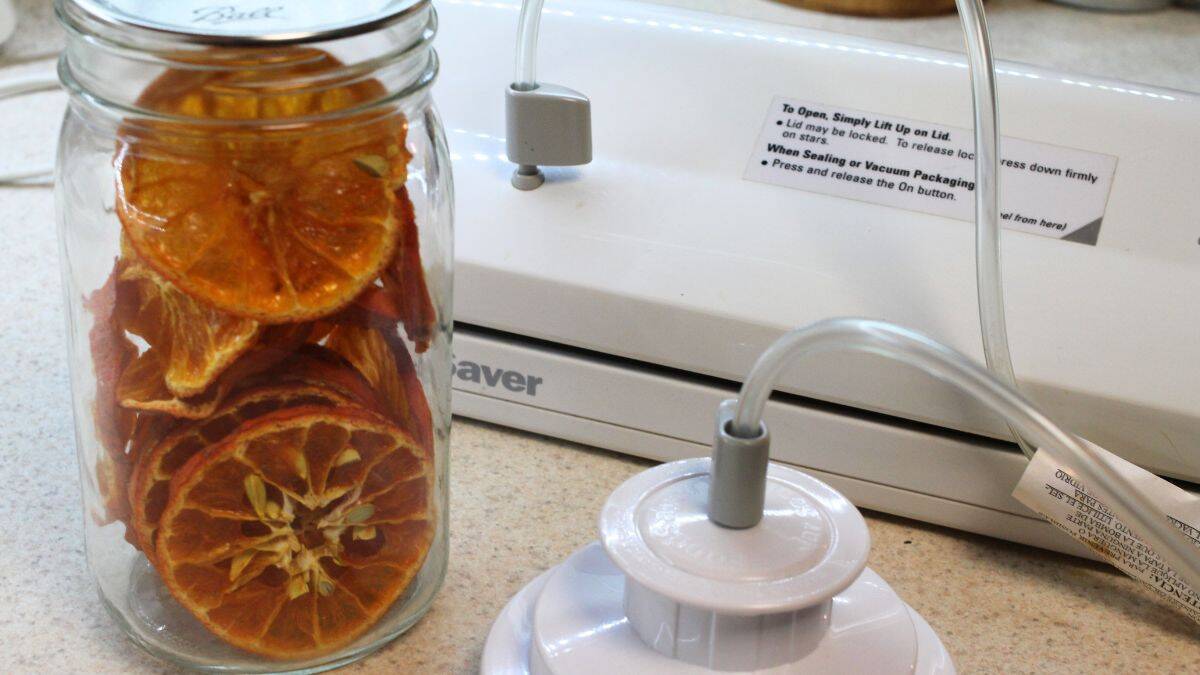
As long as the lemon slices and lemon zest are fully dry they’re shelf stable. I like to store them in mason jars that have been sealed with a food saver in the pantry. As long as they are in an airtight container, dehydrated lemons will last for about 12 months. After that, the quality will start to deteriorate.
I once stored the dried zest in a jar in the freezer and we had a power outage. When I pulled out the jar of zest all the lemon oil had leached out of the zest and it was as soggy mess. So, I don’t store dried citrus in the freezer any more.
If you are making dried lemon powder, keep the majority of the lemon slices whole and only grind them as you need them. Once ground the lemon powder tends to stick together when exposed to air and humidity.
How to use dried lemons
Before preserving any food, I like to think through how I’ll actually use it – that way I preserve it in the form that’s most useful. Here’s how we use every form of dehydrated lemon:
Dried lemon slices: Drop into water or sparkling water for a light lemon flavor, use as a garnish for cocktails or mocktails, add to hot tea, or use for crafts – potpourri, citrus garlands, and dried wreath decorations. Keep in mind that dried slices are darker than fresh, so they won’t give you that bright yellow look.
Dried lemon zest: Substitute 1:3 for fresh zest in baking (dried zest is more concentrated). Use in herbal tea blends, stir into salad dressings, or mix into butter for a quick compound butter to serve over fish or chicken. I use most of our dried zest in herbal tea blends and for baking cranberry lemon biscuits.
Lemon powder: Use in baking wherever a recipe calls for zest, mix into marinades for fish or shrimp, stir into soups and sauces for brightness, blend into a lemon pepper spice mix, or use to make instant lemonade. Note that it doesn’t dissolve like a drink mix – stir well and expect a little texture.
Lemon salt: Finish grilled fish or chicken, use on roasted vegetables, or use as a rim salt for cocktails. It’s also a lovely handmade gift packed in a small jar.
Lemon sugar: Stir into tea, use to rim a cocktail glass, bake into shortbread or scones, or sprinkle over fresh fruit. It brings a more complex lemon flavor than plain sugar.
Tried this recipe? Please leave a ⭐️⭐️⭐️⭐️⭐️ star rating in the recipe card below and/or a review in the comment section further down the page. We always appreciate your feedback. You can also save the recipe for later by pinning it or clicking on the heart in the lower right hand corner.
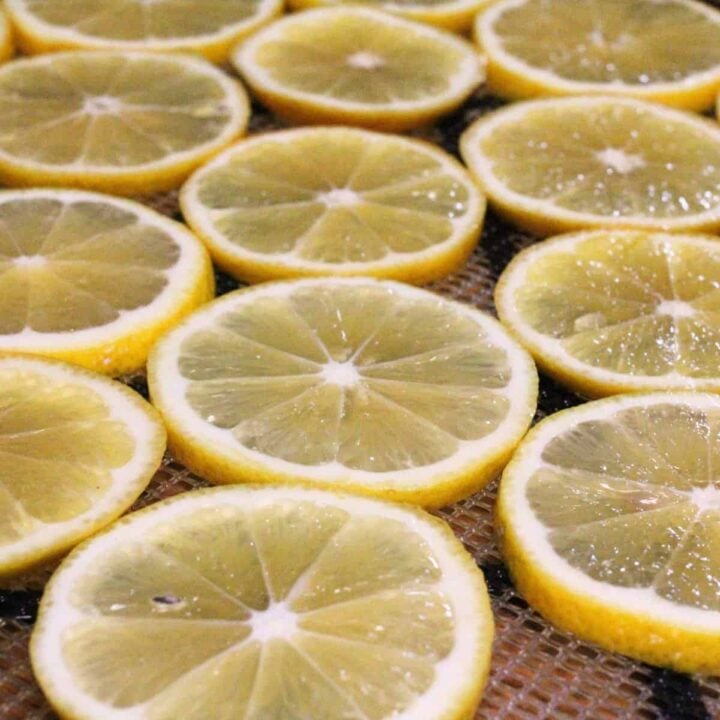
Dehydrating Lemons Recipe (slices and zest)
Using a dehydrator or oven is a quick way to make dried lemons to use for food, seasonings, beverages, and crafts. During the winter, when lemons are in season, spend a little time dehydrating lemon slices, zest, and powder to use throughout the year.
Ingredients
- Sugar (optional)
- Salt (optional)
- Lemons
- Other citrus (optional)
Instructions
Dried Lemon Slices
- Wash the lemons - if needed
- Cut the lemon in thin slices crosswise (no bigger than 1/4" thick)
- Lay the lemon slices on the dehydrator rack. It’s okay if they touch, so put them close together.
- Dehydrate the slices on low or at 125°F for about 16-18 hours. The slices should easily snap in half when they’re fully dry.
Dried Lemon Zest
- Wash the lemons - if needed
- Zest the lemon being careful not to cut into the white pith
- Lay the zest out on the fruit leather tray in the dehydrator
- Dehydrate on low or 95°F for 4-6 hours. The zest should be crumbly when fully dry.
Lemon Salt
- Use the zest of 2 lemons to 1/2 cup of salt.
- Spread the lemon salt out on a dehydrator tray lined with a parchment paper or a fruit leather tray.
- Dehydrate at 125°F for 30 minutes or until the lemon salt is dry and crumbly
Lemon Sugar
- Use the zest of 1 lemon to about 1-1.5 cups of sugar.
- Spread the lemon sugar out on a dehydrator tray lined with a parchment paper or a fruit leather tray.
- Dehydrate at 125°F for 30 minutes or until the lemon sugar is dry and crumbly
Store dehydrated lemons in an airtight container in a cool, dark place.
Notes
To dehydrate lemon slices and lemon zest in the oven: Turn the oven onto the lowest setting and leave the door ajar. You'll need to check on the lemons periodically and rearrange them so that they dry evenly.
To dehydrate zest, lemon sugar or lemon salt in the oven: Preheat the oven to 200°F. Put the zest, salt or sugar on baking sheet. Turn off the oven when you put the baking sheet in and let it sit in the warm oven overnight.
Recommended Products
As an Amazon Associate and member of other affiliate programs, I earn from qualifying purchases.
-
 Excalibur 9-Tray Electric Food Dehydrator with Adjustable Thermostat For Temperature Control Patented Technology For faster & Efficient 15 Square Feet Drying Space, Black
 -
Nesco FD-75A Snackmaster Pro Food Dehydrator, White - MADE IN USA
-
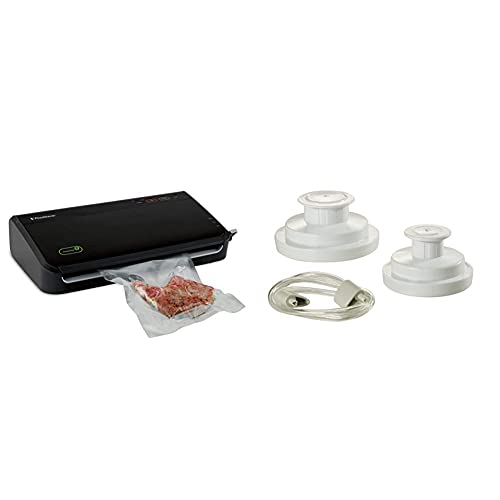
FoodSaver FM2100-000 Vacuum Sealer Machine System with Starter Bags & Rolls | Safety Certified, Black & Regular Sealer and Accessory Hose Wide-Mouth Jar Kit, 9.00 x 6.00 x 4.90 Inches, White
-
Ball Regular Mouth Quart 12 Pieces Jars (32oz) Made in USA
-
Hamilton Beach 80335R Fresh-Grind Coffee Grinder (80335)




Frequently Asked Questions
Properly dehydrated and stored lemon slices and zest last up to 12 months in an airtight container in a cool, dark place. Vacuum sealing the jars significantly extends this – up to 2 years for slices that are thoroughly dry. The key is making sure the lemons are completely dry before storing; any remaining moisture will cause mold during storage. The conditioning step (sealing in a jar and checking for condensation over 7-10 days) is how you confirm they’re dry enough for long-term storage.
Yes – lemons are one of the easier fruits to dehydrate because their low moisture content and high acidity mean they dry relatively predictably and don’t require any pretreatment to prevent browning. The main things to know: they will darken significantly during drying (this is normal and doesn’t affect quality), and they take longer to fully dry than you might expect – plan for 16–18 hours at 125°F or 8–12 hours at 135°F.
Dried lemon slices are great for infusing water, tea, and cocktails, and for crafts like potpourri and citrus garlands. Dried lemon zest substitutes for fresh zest in baking and cooking. Lemon powder works in marinades, sauces, baked goods, and spice blends. Lemon salt is wonderful as a finishing salt for fish, chicken, and vegetables. Lemon sugar elevates tea, baking, and cocktail rims. The uses are genuinely broad -it’s one of the most versatile things you can dehydrate.
I don’t have an air fryer so I can’t give you tested instructions for this one. What I can tell you is that the oven method works well and is a solid option if you don’t have a dehydrator – see the instructions above.
This is completely normal. Lemons darken during dehydrating regardless of temperature – it’s a natural reaction to heat and oxidation, not a sign of spoilage. Higher temperatures cause more browning; if you want the lightest possible color, use a lower temperature (125°F) and dry slowly. Storing dehydrated lemons in direct sunlight will also cause them to degrade and darken over time, so keep jars in a dark cabinet.
Yes – the oven method works well. Set your oven to its lowest temperature (usually 170°F), prop the door open slightly with a wooden spoon to allow moisture to escape, and place lemon slices on a wire rack over a baking sheet. Check every hour or two and rotate the slices for even drying. Expect 6-8 hours for slices. The oven method works best for lemon slices; for zest, lemon salt, and lemon sugar, you can turn the oven to 200°F, put the tray in, and immediately turn the oven off – the residual heat is enough to dry them overnight.
If you’re using the peel – which you are for zest, slices, lemon salt, and lemon sugar – yes, organic is strongly recommended. Conventional lemons are treated with wax and pesticides that concentrate in the peel. If you’re only using dried lemons for crafts or decoration where they won’t be consumed, conventional is fine.
Yes – oranges, limes, grapefruits, and Meyer lemons all follow the same process and temperatures. Thicker citrus like grapefruit takes longer to dry than thinner-skinned lemons and limes. Meyer lemons are particularly good for this because of their thinner peel and sweeter, more complex flavor – if you can get them, use them.
So, what would you do with dehydrated lemons?

Angi Schneider is the author of The Ultimate Guide to Preserving Vegetables and Pressure Canning for Beginners and Beyond, both published by Page Street Publishing. She has taught canning classes for 177 Milk Street, been featured in Serious Eats, and written for Countryside Magazine. Angi has been sharing gardening, preserving, and simple living skills since 2010.
seriously…lemon sugar? totally awesome!!! I’m gonna share this with my father who has several lemon trees in his backyard…
oh,yeah. It’s super yummy.
Great post. Since I am getting some organic lemons soon I will be doing this. :))
Thanks, Jennifer. I try to use the entire lemon. I zest the peel, then juice them, then put the leftover pith into a bucket with vinegar to use for cleaning. Let me know how it works out for you.
What a great idea! I never really thought about dehydrating lemons before, but I like to have a glass of water with a lemon slice in it first thing in the morning. I am going to have to try this!
You can use a vegetable peeler to peel the zest off, too. Just make sure it peels thin enough. I have two peelers and one peels very thin (great for fruit and cucumbers) one peels thicker (better for potatoes and other “bumpy” things. I use it to get long thin strips of zucchini, cucumber or carrots to use in soup, lasagna or as decoration) 🙂
I have a lemon and a lime (and other fruits and veggies) drying right now, I cut thin slices as far as I could then turned the fruit on its cut side and cut the “butt” into slices so they’re crescent shaped. Can’t wait to try them in water along with dried cucumber. I’m hoping for more flavour than I get from u-dried fruit.
Thanks for the tips, Nicole. I never would have thought to use a vegetable peeler!
No matter how hard I try, just can’t stop grating my knuckles so I’ve got 2 separate peelers myself, and it works great!
@Nicole, first timer here, went through 4 peelers to find the one that gave me the right size strip
I’d love a copy of your list for ways & recipes to preserving lemons!
My list for preserving lemons is just handwritten notes in my preserving notebook. I have an article on how I preserve the whole lemon in various ways, https://creativesimpleliving.com/preserving-meyer-lemons-zero-waste-kitchen/. I also have an article with a list of Meyer lemon recipes, https://creativesimpleliving.com/meyer-lemon-recipes/. You also might like this list from Rootsy, https://rootsy.org/ways-to-use-lemons-for-food-and-healing/.
If you don’t already keep a preservation notebook, these worksheets can help you keep track of what and how much you preserved, https://creativesimpleliving.com/home-preserved-pantry-worksheets/
I noticed that you left the seeds in your slices. Is that because you aren’t turning your slices into powder? I have 6 racks of lemon slices in the dehydrator now that I am drying for powder with Meyer lemons and I took all the seeds out first. And there were lots of seeds! Wondering if I can leave them in next time. Hopefully the powder won’t be too bitter with the pith this time.
I would certainly remove the seeds if there are a lot and I’m turning it into powder. Sometimes, I’ll zest the lemons, then peel the pith off, and then slice them, remove seeds, and dehydrate them. This would make the least bitter powder.
Hi, Is there an easy trick for removing the pith after removing the zest?
I just peel it like an orange.
@Naomi,
Using a serrated knife works well, but you will lose some lemon. This is how I get segments from grapefruit or oranges for fruit salads.
hi there – do the times/temps listed work for regular ovens as well? I don’t have a dehydrator, but am willing to babysit an over especially on a cold day! Thank you!
Yes, they should. If your oven doesn’t go that low, leave the doo open just a bit.
This is a wonderful idea! Homemade lemon zest from them would be so potent!
This article is great! I always have an abundance of lemons that end up going bad. Now I know what to do with them.
If I soak the sliced lemons in a bit of fruit fresh, will that help them maintain their color? I know lemon juice is an alternative to ascorbic acid.
It’s worth a try!
Great information on Meyer Lemons 🍋! They are my absolute favorite. Can you provide any tips on using them once dehydrated please? Thanks!
You can grind them and use them mixed with salt for lemon salt and sugar for a lemon sugar. They can also be used in water or teas.
@Laura, whenever you want a hint of lemon in anything.
Compound butter for fish dishes
In baked goods
Lemon pepper spice mix
Sprinkle on chicken then bake