




If you live in the south, you’ve probably seen dewberries growing along fence lines or in patches in a field. These small, trailing vines produce juicy berries that look like blackberries but ripen earlier in the season. With a little care, you can bring these wild berries into your own garden and enjoy a harvest that feels both homegrown and a little bit wild.
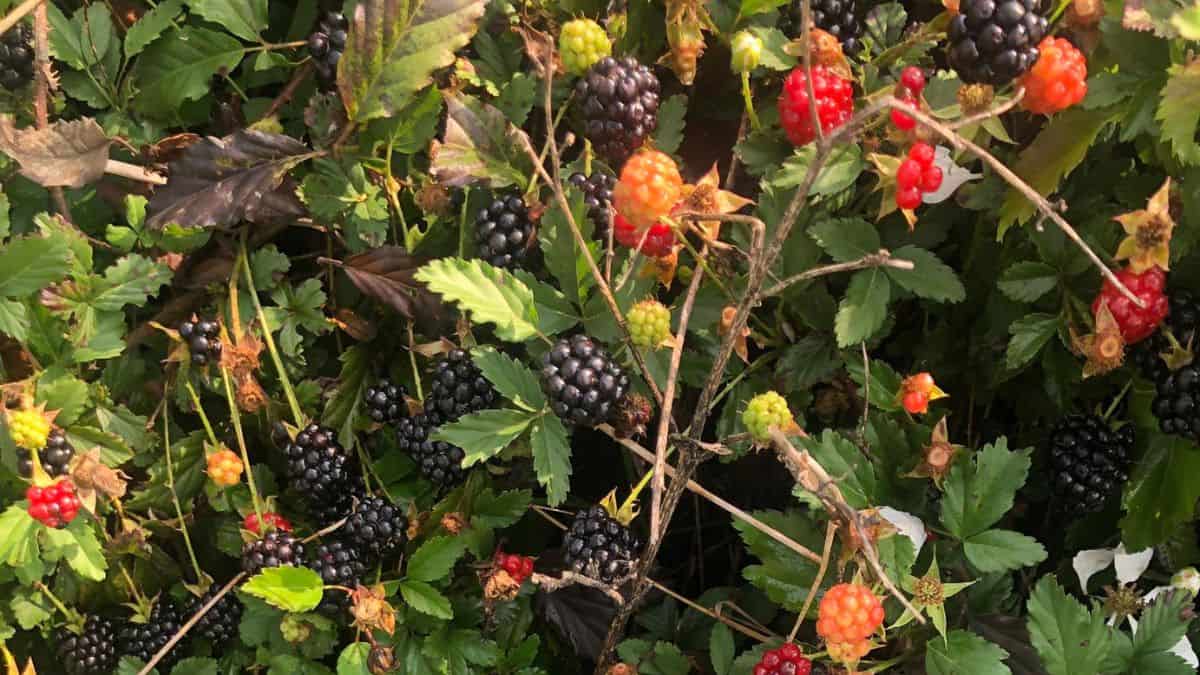
For decades we foraged dewberries each spring, but a few years ago we decide to plant a few dewberry plants to start our own dewberry patch. Since dewberries are native to Texas, they’re pretty stress-free. Like our mulberry trees, the dewberry patch feels like free food every spring!
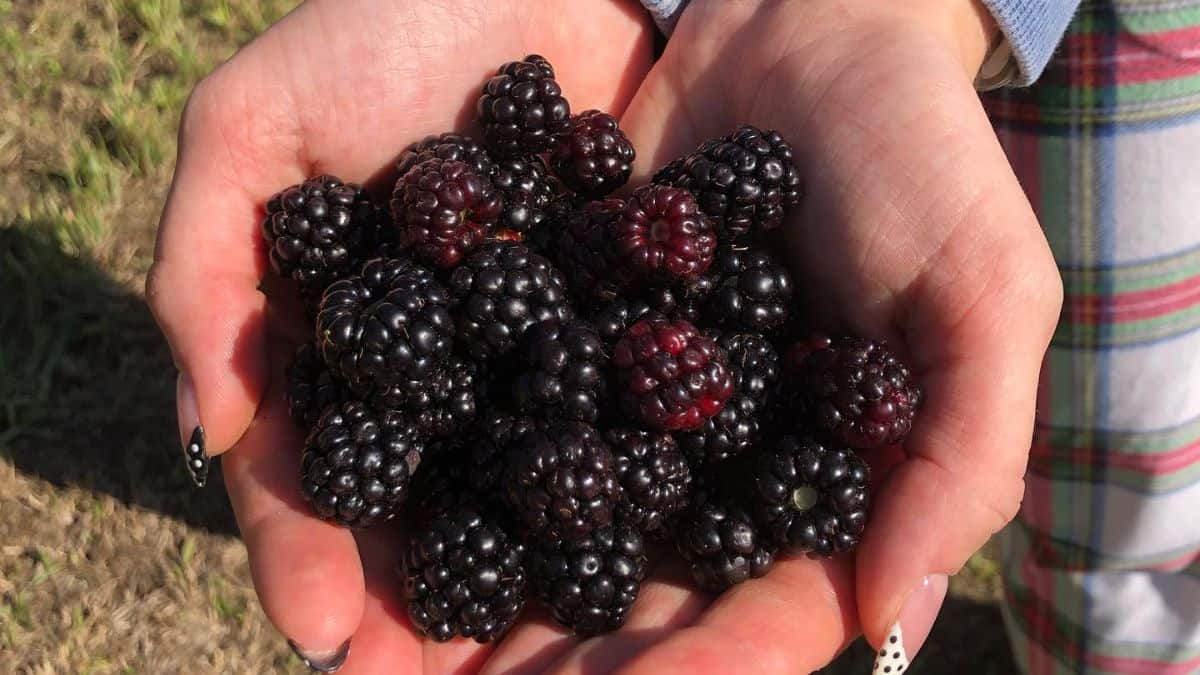
We actually have a couple of thornless blackberry plants in our patch which have crossed with the dewberries. Some of the plants produce larger berries than others, some are more flavorful than others, but all seem to have thorns. Most wild dewberries are smaller and the core will often stay on the plant when the berry is picked.
Pro Tip: If you’re foraging wild dewberries, be sure to wear closed toe shoes, preferably rubber boots, with your pants tucked into your socks to avoid chiggers and scratches. Also, be on the lookout for snakes.
What Are Dewberries?
Dewberries are part of the Rubus family, the same plant group as blackberries and raspberries. The main difference between blackberries and dewberries is how they grow – blackberries send up tall, arching canes and dewberries trail along the ground. In fact, their stems root wherever they touch the soil, which makes them quick to spread but also easy to propagate.
In Texas and across the southern US, the native species (Rubus trivialis) is often called Southern dewberry. There is also a Pennsylvania dewberry (Rubus pensilvanicus) which grows on the East coast, it’s more upright and bushy than Southern dewberry plants. There are many species of wild blackberries, you can go down a rabbit hole in hurry. So, don’t get too caught up in knowing exactly what species is growing in your are.
Southern dewberry plants are a hardy perennial bramble with small, five-petaled white flowers in early spring, followed by shiny purple-black berries in late April or May—several weeks before blackberries start to ripen. In our area, dewberry fruit ripen just a few weeks before the mulberry harvest starts.
Dewberries taste a lot like blackberries, though they’re often described as slightly tarter and more complex. They make excellent jams, cobblers, syrups, and even tea from their leaves or flowers.
Differences Between Dewberries and Blackberries
| Feature | Dewberries | Blackberries |
|---|---|---|
| Growth Habit | Low-growing, trailing vines that sprawl along the ground | Upright or arching canes that grow several feet tall |
| Berry Size | Slightly smaller, typically less plump than blackberries | Larger and fuller berries |
| Color When Ripe | Deep purple to almost black | Deep black with a glossy sheen |
| Ripening Time | Ripen earlier in the spring (often 2–3 weeks before blackberries) | Ripen later in early to mid-summer |
| Flavor | Sweeter and more intense flavor, often described as “wild” | Milder, sometimes more tart, depending on the variety |
| Stem Core | Hollow center when picked (core stays on the plant) | Solid core stays inside the berry when picked |
| Thorns | Typically have fine, dense thorns on vines | Many cultivated varieties are thornless; wild types are thorny |
| Habitat | Prefer sandy, well-drained soils and are common in the southern U.S. | Found widely across North America; adapt to a range of soils |
| Uses | Excellent for fresh eating, jams, pies, and foraging | Commonly cultivated for commercial production and home gardens |
Why Grow Dewberries?
When we first decided to grow a patch of dewberries, we got quite a few questions about why we would do that when they’re easy to forage along local pasture fence lines. The main reason is that I’m getting older and entering the empty next season.
While we used to be able to spend an afternoon or two foraging enough dewberries for the year, that is no longer possible. Now, I can spend some time each morning in my own patch picking what’s available that day.
If you already grow berries, dewberries are an easy addition. They’re tough, drought-tolerant, and perfectly suited to poor soils that might challenge fussier fruits. And if you like the look of a naturalized, cottage-style garden, dewberries fit right in—sprawling, graceful, and buzzing with pollinators in spring.
A few reasons to consider growing dewberries:
- Low maintenance: Once established, they need little watering or care, in fact I pretty much just ignore the patch.
- Early harvest: Dewberries ripen before blackberries, extending your berry season.
- Native and wildlife-friendly: The flowers feed bees, and birds love the fruit.
- Deliciously versatile: Eat them fresh, turn them into dewberry jam, or freeze for smoothies or baking later.

Where and How to Plant Dewberries
Sunlight: Dewberries thrive in full sun but can tolerate partial shade. In very hot areas, a bit of afternoon shade helps prevent leaf scorch.
Soil: Well-drained sandy or loamy soil is best. They prefer slightly acidic soil (pH 5.5–6.5). Heavy clay soils should be amended with compost to improve drainage.
Spacing: Give each plant about 2–3 feet of room and be prepared for spreading canes. You can contain them with garden edging or low trellising.
Planting time: Late fall through early spring is ideal, when the plants are dormant. If you’re transplanting wild dewberries, do so while the soil is cool and moist.
Propagating Dewberries
Honestly, dewberries will pretty much propagate themselves if left alone. Wherever the cane touches the ground, it will want to root and make a new plant. Dewberry canes can reach up to 15 feet long, rooting itself along the way. This is why they tend to take over if you aren’t diligent about containing them with some trellising or edging.
That being said, if you’re trying to get a large patch of berries established or if you there’s a specific plant that extra tasty and you want more of that plant propagating buy layering or root division is the way to go.
Layering:
Bend a healthy cane down to the ground and bury a small section under soil, leaving the growing tip above the surface. Keep it slightly moist. In a few weeks, it will sprout roots, and you can snip it from the parent vine to replant elsewhere.
Root division:
Dig up a rooted section of vine with at least one healthy cane and replant it where you’d like a new patch.
From seed:
You can grow dewberries from seed, but it takes patience. Seeds may take a few months to sprout, and plants often need two to three years to fruit. For most gardeners, layering or transplanting is much faster.
Caring for Dewberries
Once planted, dewberries need very little attention. As I mentioned earlier I pretty much just leave them alone. This may not have been the best idea since I now have a dewberry jungle. I have dreams of one day taming that jungle and trellising the dewberries and mulching pathways so they’re easier to pick.
But until then, I’ll just wade into the jungle every spring and hope for the best.
If you’re starting a new patch, here’s what to do:
Mulch generously. Use straw, leaves, or wood chips to hold moisture and suppress weeds. I mulched the first few plants but once they got established they really don’t need mulching. That’s the beauty of growing native plants.
Water deeply but occasionally. They tolerate drought but fruit better with consistent moisture. This is especially true during the spring when they’re flowering and setting fruit.
Prune yearly. After fruiting, remove any dead or tangled canes to promote airflow and new growth. Dewberries produce on year-two canes. The canes that produced berries this year will be a darker brown, those canes can be pruned. Leave the green canes (year-one canes) and those will be the producers next season.
Support if needed. Low trellises or a fence help keep the berries off the ground and easier to harvest.
Because dewberries are close relatives of blackberries, they share some of the same pests and diseases—like rust or cane blight. Good air circulation, crop rotation, and pruning help prevent most problems.
Quick Start Guide to Growing Dewberries
- Sun: Full sun for best fruiting; light afternoon shade okay in hot areas
- Soil: Well-drained, slightly acidic (pH 5.5–6.5)
- Spacing: 2–3 feet apart; vines can spread several feet
- Water: Deep watering during dry spells; otherwise fairly drought-tolerant
- USDA Zones: 6–9 (some species hardy to Zone 5)
Harvest and Store
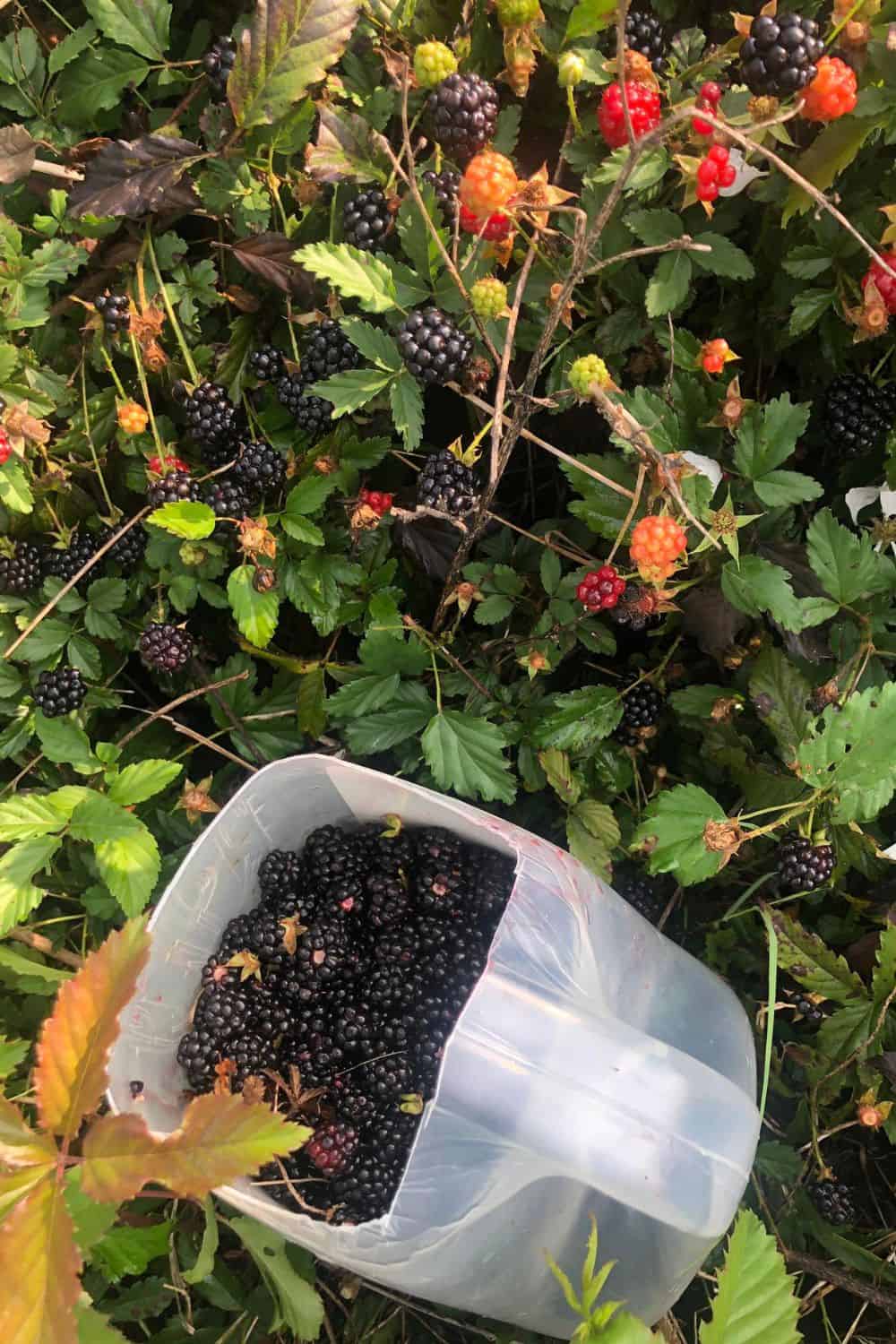
Dewberries ripen from red to deep purple-black, usually in late spring. They should pull easily from the stem when fully ripe—don’t force them or they’ll be too tart.
Dewberry plants have LOTS of little thorns, you can certainly pick them without gloves but you’re going to get thorns in your hands. So, I suggest wearing gloves when picking.
Also, use shallow baskets when picking, as dewberries are softer and more delicate than blackberries. Some of the dewberry fruits may fall apart when you pick them, they’re just really ripe and are perfectly fine to keep.
When you bring them inside, gently wash them to remove any grass or debris. We like to fill a big pot with cold water and then put a colander with some berries in the water. This works best if the colander will kind of hand on the lip of the pot. Any debris will float to the top and can be skimmed off.
After skimming the debris, remove the colander from the pot and let the water drain off. Gently pour the berries on a baking sheet and spread them out to let them finish drying. Once they’re fully dry you can store them in the refrigerator for up to three days, or freeze them on a tray before transferring to freezer bags.
I will say that dewberries will mold VERY quickly in the refrigerator if they’re still wet. So if you’re going to refrigerate them, be sure they’re fully dry.

How to Enjoy Dewberries
Dewberries can be used wherever you normally use blackberries. Be sure to freeze some to use throughout the year.
- Eat them fresh by themselves or added to a salad
- Fresh with yogurt or oatmeal
- Homemade dewberry jam or syrup
- Simple dewberry cobbler or dewberry crisp
- Fermented into a refreshing shrub or wine or mead.
- The dewberry leaves, flowers and fruit can be dehydrated to use in teas. Pick the leaves before the dewberry plants flower. Go easy on picking the flowers since the flowers are needed for the plant to produce dewberry fruits.
Final Thoughts
Growing dewberries is a wonderful way to reconnect with a bit of wild flavor and bring a native, resilient fruit into your garden. They don’t demand much—just sunshine, a little space, and a willingness to share a few berries with the birds.
Once you’ve tasted your own dewberries fresh from the vine, you’ll wonder why more gardeners don’t grow them.

Angi Schneider is the author of The Ultimate Guide to Preserving Vegetables and Pressure Canning for Beginners and Beyond, both published by Page Street Publishing. She has taught canning classes for 177 Milk Street, been featured in Serious Eats, and written for Countryside Magazine. Angi has been sharing gardening, preserving, and simple living skills since 2010.