
Can you freeze lemons? Yes – and it’s one of the most useful things you can do when you have more lemons than you can use fresh. We have a Meyer lemon tree that produces hundreds of pounds of lemons most years, so I’ve been freezing them in every form imaginable for over a decade. Whole, sliced, juiced, and zested – each method has its place depending on how you plan to use them.
What I love about freezing lemons is how little work it takes compared to other preservation methods. No processing, no canning equipment, no sugar. Just clean lemons and freezer space.
In this guide I’ll walk you through all four methods, tell you how long each one lasts, and – just as importantly – how to thaw and use them so nothing goes to waste.
I keep track of my preserved food with these worksheets. You can get them emailed to you by filling out the form below. It’s nice to have all that information of what I preserved each year in one place.
A note on Meyer lemons vs. regular lemons
Everything in this guide applies to any variety of lemon – regular grocery store lemons (usually Lisbon or Eureka varieties) work exactly the same way as Meyer lemons. The difference is flavor: Meyer lemons are a cross between a lemon and a mandarin, which makes them sweeter, juicier, and less acidic than regular lemons with thinner skin. We use Meyer lemons because that’s what our tree produces, but if you’re using regular lemons from the store, all of these methods work identically.
Note that if you’re using frozen whole regular lemons in water: the rind of a regular lemon is more intensely flavored than a Meyer lemon and can make water taste bitter rather than refreshing. If that happens, remove the rind before dropping the slice into your glass, or rinse the frozen slice quickly under running water first.
What Makes Freezing Lemons So Worth It
- When you have a lemon tree – or find a great sale – freezing is the fastest way to preserve them with almost no hands-on time.
- Unlike dehydrating or canning, frozen lemons require no special equipment and no learning curve. If you can use a freezer bag, you can do this.
- Freezing whole lemons is a game changer for juicing – thawed lemons actually release more juice than fresh ones because the cell walls break down during freezing.
- Having frozen lemon juice in ice cube trays and frozen zest in the freezer means you’re never caught without lemon when a recipe calls for it.
Preparing Lemons to be Frozen
Since we grow our own lemons or get surplus from neighbors who grow their own lemons I know they haven’t been sprayed with anything. So, I don’t feel a need to do more than a quick washing with dish soap and water to prepare them.
Birds like to nest in our tree so there might be bird droppings on some of them and our chickens like to hang out under the tree and kick up dirt with sticks to the lemons. So, they definitely need to be washed even though they are organic.
If you’re using store bought lemons you might want to wash with a bit of apple cider vinegar or vegetable wash. You’ll need to do your own research and decide the pros and cons of it all.

Four Ways to Freeze Lemons
Be sure to think about how you use lemons so you can decide the best way to freeze them. If you don’t drink lemonade, you probably don’t want to freeze juice in large batches. If you prefer to dehydrate the zest, then don’t freeze any. You get the idea.
Freezing Whole Lemons
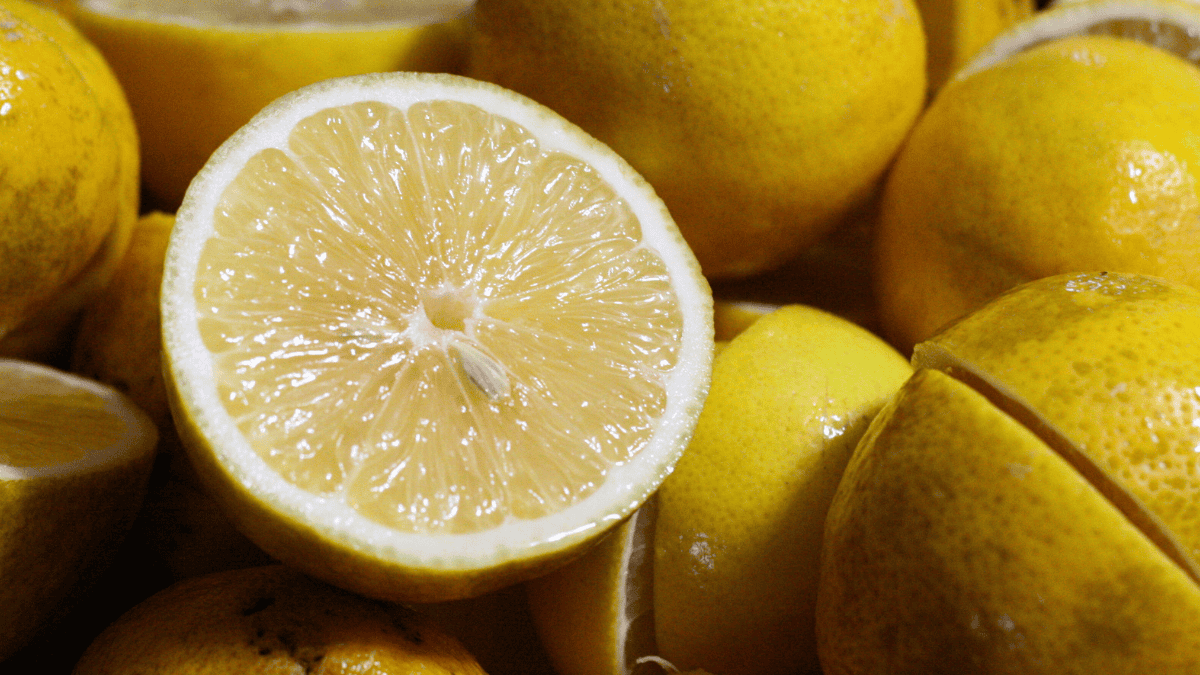
Freezing lemons whole is the easiest way to preserve lemons.
- Wash and dry lemons
- Toss in the freezer
- If you have more than one or two lemons, put them in a ziplock bag so they stay together.
I freeze 10-12 this way each year to use during the winter for my homemade cold and flu remedies. But I also think this is the best way to deal with lemons that won’t get used before shriveling up.
What happens when you freeze lemons like this? When frozen lemons thaw out the texture is mushy, so be aware of that. You won’t want to use them for things that don’t need to look nice. But the flavor is the same as fresh lemons.
In addition to using frozen lemons to make homemade remedies, you can grate a whole frozen lemon. Once the lemon is completely froze, use a cheese grater to grate the whole thing. You’ll want to wear an oven mitt for this because it’s hard to hold a frozen lemon for long.
Then put the frozen grated lemon in a bag or jar and put it back into the freezer. When you want to season a dish or your water put a spoonful of the frozen grated lemon in it.
You can also just grate the frozen lemon as you need it, and put the portion you didn’t grate back in the freezer to grate and use later.
This gives you the benefits of the juice and the rind. The essential oil is in the rind and it has some healing properties – but the vitamins are in the juice and that has some great healing properties.
If you’re in the habit of putting drops of lemon essential oil in your water each day (which I don’t recommend, by the way), using frozen grated lemons instead will give you all the health benefits of lemon and is much cheaper and environmentally friendly.
Freezing Lemon Slices
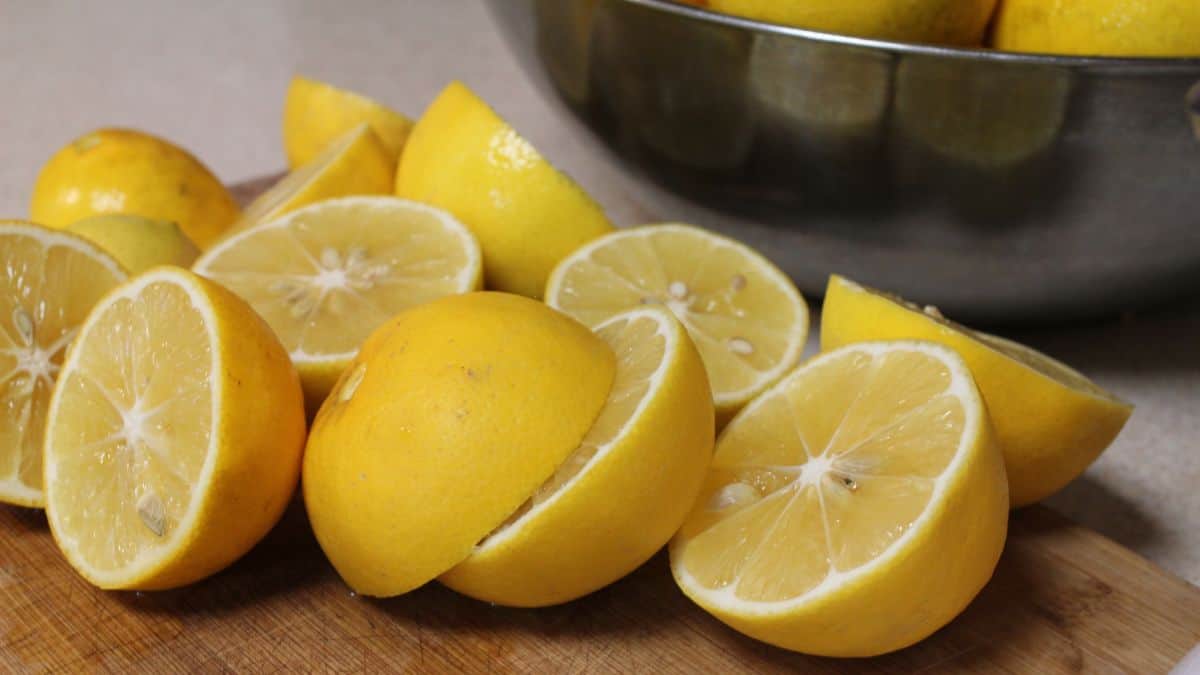
You can freeze lemon slices the same way you freeze cucumber slices.
- Wash and dry the lemons
- Slice the lemons 1/4″ thick
- Lay lemon slices on baking sheet lined with parchment paper
- Put baking sheet in the freezer overnight
- Once frozen, remove lemon slices and put in ziplock bag
- Store frozen lemon slices in freezer
Of course frozen lemon slices are great for infusing water but they can also be used for cooking fish or chicken or used as a garnish.
When the lemon slices thaw out, the juice will most likely be released from the pulp cells. The juice expands when frozen and the cells can (and probably will) burst, especially if the lemons are super juicy like Meyer lemons are. That’s totally fine if you’re dropping a frozen lemon slice into water. It’s not so fine if you’ve laid the bag of frozen lemon slices on the counter and forgot and they all thawed out.
If you’re using them to bake fish, put the lemon slice on before it thaws out, then the juice will permeate the fish while baking. If you’re using it as a garnish and don’t want lemon juice puddling, thaw the lemon slices on a separate plate and then add them as a garnish. Just know that they won’t be nearly as pretty as fresh lemon slices.
Freezing Lemon Wedges or Halves
If you use a lot of lemon wedges for water or cooking, cutting on the front end saves time later. Freeze wedges or halves exactly the same way as slices — spread in a single layer on a parchment-lined baking sheet, freeze until solid, then transfer to a zip-lock bag.
Just know they’ll be mushy when thawed, which is fine if you’re dropping them into water or squeezing out the juice. If appearance matters, use fresh.
Freezing Lemon Juice
I’ve used a variety of citrus juices over the years, each one has it’s pros and cons. So don’t get too hung up on using the “right” juicer. We have a hand held juicer, which is great if you only have a few lemons to juice and it quite inexpensive.
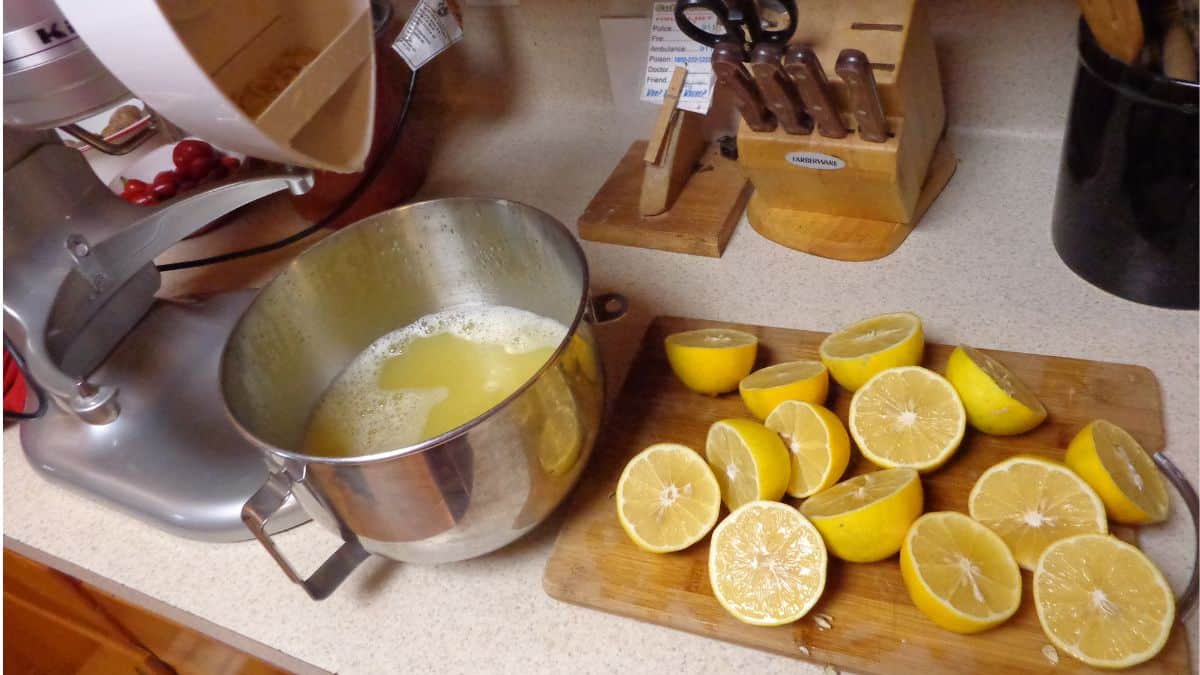
I also have a citrus attachment for my KitchenAid Mixer which is good if you have a lot of lemons to juice – but I have noticed that when I’m doing a lot of lemons the juice starts to run down my arm and will even get back behind the attachment sometimes.
Because of that, I now have a small electric citrus juicer that works great, takes up very little space, and is not as messy as the KitchenAid attachment.
I mainly freeze our juice in 16 ounce plastic cups. I have a set of reusable plastic cups that we use for large gatherings that I also use for freezing lemon juice.
Lemon juice can also be frozen in ice cube trays, which I’ll do a few of. But since we mainly use the frozen lemon juice for lemonade I like the cups better, I use one block of frozen lemon juice to make a gallon of lemonade.
To freeze lemon juice in the cups or ice cube trays,
- Fill the cups (or ice cube trays) with lemon juice
- Put the filled cups or ice cube trays in the freezer overnight.
- The next morning, run warm water over the cup to thaw it out just a bit. The juice block should be able to be popped out of the cup when you squeeze the cup. You can skip the warm water step if you froze the lemon juice in ice cube trays.
- Put the frozen lemon juice blocks or cubes in a ziplock bag and store in the freezer.
You can freeze lemon juice in glass if you’re not using plastic. Just leave about a couple of inches head space and don’t put the lid on until they are frozen. Also, shorter jars with wide mouths work best for freezing. Here are some more tips for freezing in glass containers.
I also fill a few cups with lemon slices and lemon juice poured over them to freeze. When we have a party, the lemonade has fun lemon slices floating in it.
What you don’t want to do when freezing lemon juice is to just leave it in the open cups or ice cube trays – they need to be transferred to some kind of airtight container. If you don’t, the water in the juice will evaporate over time and leave you with a freezer burned mess – don’t ask me how I know…lol.
Freezing Lemon Zest
Freezing lemon zest isn’t my favorite way to preserve it; I prefer to dehydrate lemon zest. But it is possible to freeze lemon zest and lots of people like to preserve zest by freezing it.
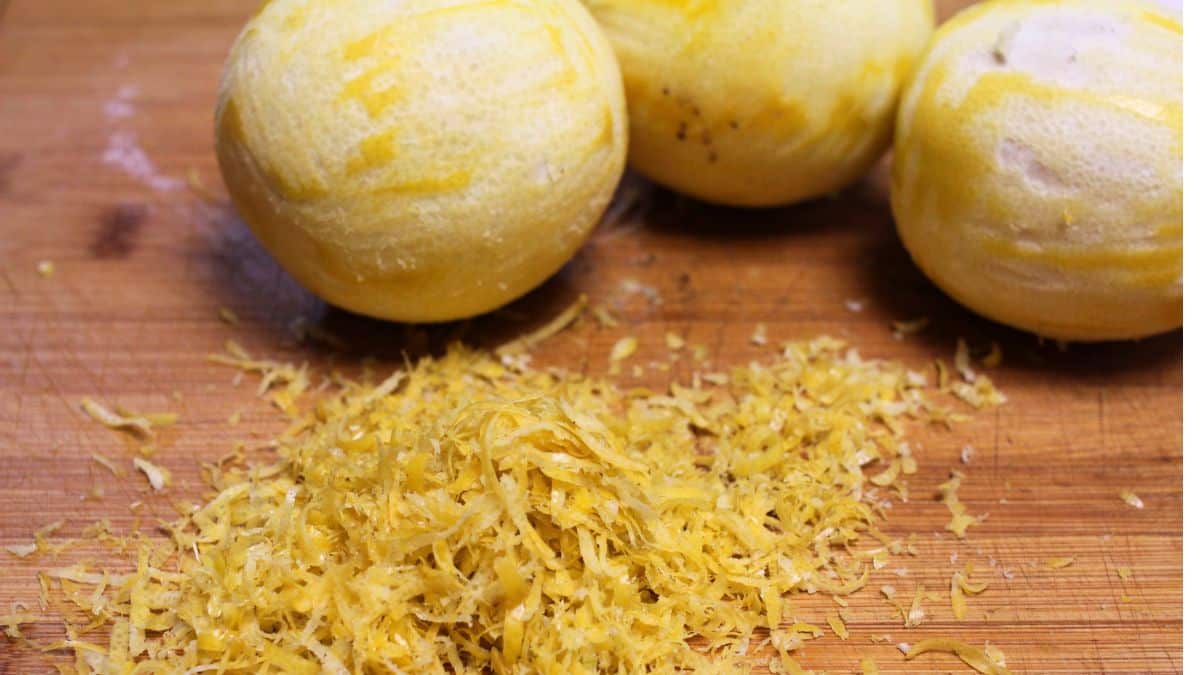
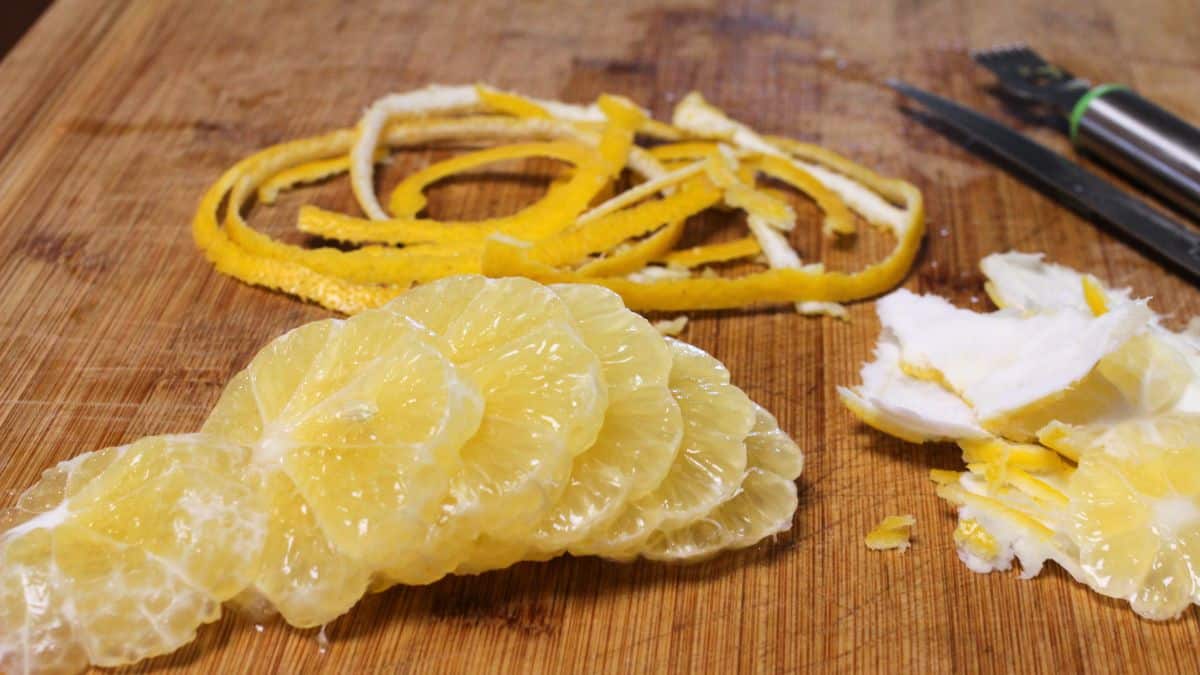
Having a zesting tool to zest lemons is really great because a regular grater will often dig too far into the pith which is the bitter white part on the inside of the lemon peel. The pith is great for digestion which is another reason why using a whole grated frozen lemon is good for your health.
But when I am baking with lemon zest, I really don’t want the bitter taste of the peel.
- Wash and dry the lemons
- Using a zesting tool remove the peel from the lemons
- Put lemon zest in a mason jar or ziplock bag and store in the freezer.
Just like the frozen lemon slices, when frozen lemon zest thaws out it releases the oils. So don’t leave the jar of frozen lemon zest out long enough to thaw out. I’ve done this and it’s a huge bummer to see a years worth of lemon zest no longer usable.
That’s why I now dehydrate lemon zest instead of freezing it.
How Long Do Frozen Lemons Last
This depends on how you store them. In a standard zip-lock freezer bag with the air pressed out, frozen lemons (in any form) will maintain good quality for 3 to 4 months. Beyond that, flavor and texture begin to decline.
If you vacuum seal the containers – using a FoodSaver or similar – frozen lemon juice and slices will easily last 6 -12 months, and I’ve had large blocks of frozen juice last closer to two years in our chest freezer. The vacuum seal is what makes the difference, removing the air that causes freezer burn and oxidation.
So my honest answer is: 3–4 months for standard storage, up to a year or more for vacuum-sealed storage.
Signs of freezer burn are…
- Ice Crystals: The most common sign of freezer burn is ice crystals forming on the lemons. If it’s just a small amount, you can wash them off and use the lemons. But if they’re coated in ice crystals the lemons might not taste good.
- Dry or Shriveled: When the moisture evaporates from the lemons, they become dry and shriveled. If they’ve reached this point, they are probably no worth using.
- Off smell when thawed — trust your nose; frozen lemons should smell bright and citrusy
How to Thaw Frozen Lemons
How you thaw frozen lemons depends on what you’re using them for:
- For juice: Microwave a whole frozen lemon for 15-20 seconds, then cut and squeeze. Thawed lemons actually release more juice than fresh because freezing breaks down the cell walls. Alternatively, place in a bowl of cold water for 10-15 minutes.
- For zesting: Don’t thaw. Zest the lemon straight from the freezer – frozen lemons grate beautifully and are actually easier to zest than fresh ones. Once thawed, the peel softens and becomes difficult to zest cleanly.
- For slices in drinks: No thawing needed – drop straight from the freezer into water, tea, or a cocktail.
- For cooking: Place frozen lemon slices directly on fish or chicken before baking. The juice will release as the lemon thaws in the oven, which is actually a benefit.
Pro storage tip: keep frozen lemons toward the back of the freezer rather than near the door. Temperature fluctuations from opening and closing the freezer can degrade them over time.
Tried this recipe? Please leave a ⭐️⭐️⭐️⭐️⭐️ star rating in the recipe card below and/or a review in the comment section further down the page. We always appreciate your feedback. You can also save the recipe for later by pinning it or clicking on the heart in the lower right hand corner.
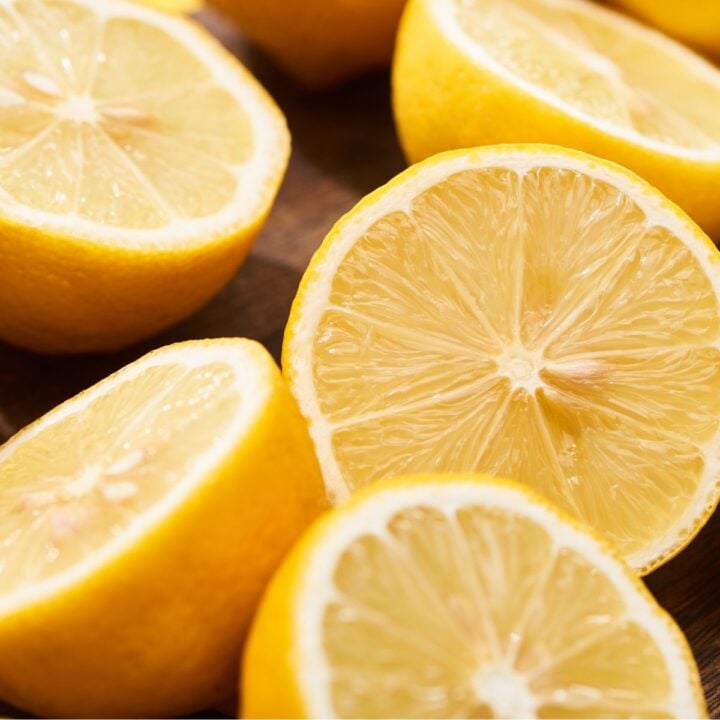
Freezing Lemons - whole, slices, zest and juice
Learn how to freeze lemons in slices, whole, zest, or juice so you always have fresh citrus on hand. A simple method for preserving lemons for drinks, cooking, and baking.
Ingredients
- Fresh lemons
Instructions
Prepare Lemons:
Wash the lemons thoroughly under cool water and pat them dry.
Freeze Whole Lemons:
Place lemons in a freezer-safe bag.
Remove excess air.
Put in freezer.
Freeze Lemon Slices or Wedges:
Cut lemons into rounds or wedges.
Place them in a single layer on a baking sheet lined with parchment paper.
Put in the freezer until frozen.
Transfer frozen lemon slices or wedges to a freezer bag for storing in the freezer.
Freezing Lemon Zest:
Zest the whole lemon.
Put the zest in a small container or freezer bag and put in the freezer.
Freezing Lemon Juice
Juice lemons.
Pour juice into a freezer safe container - ice cube trays, plastic cups or wide mouth mason jars.
Put the filled containers in the freezer.
Once frozen, transfer the frozen juice from the ice cube trays or plastic cups into a freezer bag for storage. If you used mason jars, secure the lid after they're frozen.
Notes
Best Ways to Use Frozen Lemons:
- Whole: thaw for juice/zest.
- Slices: drop into water, tea, cocktails or use for baked fish or chicken.
- Juice: lemonade, cooking, baking, salad dressings.
- Zest: marinades, desserts, sauces.
Nutrition Information:
Serving Size:Amount Per Serving: Unsaturated Fat: 0g
Frequently Asked Questions
Yes – freezing lemons whole is actually the easiest method and one I use regularly. Just wash, dry, and place in a freezer bag with the air pressed out. The texture will be mushy when thawed, but the flavor is the same as fresh and thawed lemons actually release more juice than fresh ones. For best results, zest the lemon while it’s still frozen before you thaw it – once soft, zesting becomes difficult.
In a standard zip-lock bag, 3-4 months at good quality. Vacuum sealed, up to 6-12 months or longer. The key is removing as much air as possible to prevent freezer burn. Store toward the back of the freezer away from the door to avoid temperature fluctuations.
Yes – lemon juice freezes beautifully. Ice cube trays are ideal since each cube is roughly 2 tablespoons, a convenient measure for recipes. Once frozen solid, transfer cubes to a freezer bag. If you use lemon juice in large quantities (for lemonade, for instance), freeze in larger containers – I freeze in 16-ounce portions, one of which makes a gallon of lemonade.
Yes, though I prefer to dehydrate lemon zest because frozen zest releases its oils when it thaws and can turn into a soggy mess if left out too long. If you do freeze lemon zest, use it straight from the freezer – don’t let it thaw in the bag. For most baking applications, dehydrated zest is more practical and lasts longer.
For whole lemons: microwave for 15-20 seconds or place in cold water for 10 minutes. For slices in drinks: no thawing needed, drop them in frozen. For zesting: don’t thaw – grate straight from the freezer. For cooking fish or chicken: place frozen slices directly on the food before baking.
Yes – limes, oranges, and grapefruit all freeze using the same methods. Lime juice frozen in ice cube trays is particularly handy for cocktails and cooking.
The flavor is the same, but the texture changes. Thawed lemons are softer and mushier than fresh, which is why they work better for juicing and cooking than for garnishes or situations where you need the lemon to hold its shape. Frozen lemon slices dropped directly into drinks work well because they function more as flavor-infusers than visual garnishes. Just be aware that the rind of regular lemons can release more oils than Meyer lemons and might give off a bitter flavor.
Yes – freeze them the same way as slices: lay in a single layer on a parchment-lined baking sheet, freeze until solid, then transfer to a bag. They’ll be mushy when thawed but perfectly fine for juicing.
This is more common with regular (Lisbon or Eureka) lemons than with Meyer lemons. The rind of a regular lemon contains more intensely flavored oils that can leach out when frozen and make water taste bitter. Try rinsing the frozen slice quickly under water before dropping it in, or remove the rind first and use just the flesh and juice portion.

More Freezing Guides
- How to Freeze Figs
- Freezing Basil
- How to Freeze Cucumbers
- How to Freeze Bananas
- Freezing Eggs
- How to Freeze and Reheat Mashed Potatoes

Angi Schneider is the author of The Ultimate Guide to Preserving Vegetables and Pressure Canning for Beginners and Beyond, both published by Page Street Publishing. She has taught canning classes for 177 Milk Street, been featured in Serious Eats, and written for Countryside Magazine. Angi has been sharing gardening, preserving, and simple living skills since 2010.
Yum! I love fresh lemon, not only for cooking, but for cleaning and deodorizing too. Great to know they can be frozen whole!
I know, lemons are so very versitile. Do you guys grow them?
I didn’t know you can freeze them whole! This brings a whole new light on the subject! However, we have been getting hard freezes here this past week, which is unusual for Northern California. 🙁 I don’t think my orange or lemon trees are going to make it, especially since it just keeps getting colder! Ah, well, we have tarped it and put Christmas lights on it, so we have done what we can. We will just have to see! Thanks for the lemon tips!
I KNOW! My life was changed when I found that out. I hope your trees make it. I like the Christms light idea.
I do have line trees and I make tea mix lime juice and freeze it for the busy days .i use mine within a week but I live in hot Chennai where it is only hot hotter and extremely hot no first or snow but November to Jan are mild cool .
Can I order Meyer Lemons?
Hi Jennifer, I’m sure you can. We don’t sell our lemons at this point and don’t personally know of anyone who does. But I bet if you did an internet search you can find someone. They won’t be ripe until around Thanksgiving so you have some time. Meyer lemons will also grow in a large pot indoors so you might be able to grow your own.
You can buy Meyer Lemons on Amazon.com
I live in Alaska and they’ll even ship to me.
oh wow! That’s good to know, thanks for sharing.
lemons are useful in whitening and stain removal on white linens and white cotton clothing.
wash item (but don’t dry) apply lemon juice to damp cloth and lay out or hang in the sun for a
full sunny day then wash as you normally would.
Thanks for the tip, Kathy!
Do you know if limes can be preserved this way as well?
Yes, any citrus can be preserved this way.
Thanks for the info! I have 2 large boxes of lemons to save since our tree had to be removed for a house addition! If I freeze the lemons whole and later grate them, do I grate the seeds too or will I be able to see them and pick them out if frozen?
Hi Kristine, I grate them seeds and all. I can usually find the seeds pretty easily and pick them out but if not, I just grate them with the rest of the lemon.
What is the difference between Meyer Lemons and the lemons you find at the grocery. Marked simply, lemons? I am a firm believer in the power of lemons for so many things. Thank you for these freezing tips. I me er even thought of freezing them!
Hey Laura, the lemons sold in most grocery stores are lisbon or eureka varieties. They are more tart than Meyer lemons and have thicker pith (which is the white stuff under the peel). They ship much better than Meyer lemons which is why they’re so widely available. Meyer lemons are a cross between a regular lemon and a mandarin. They are usually larger and rounder – more like an orange, have thinner skin, are juicier, and slightly less acidic. I only use Meyer lemons because that’s what I grow, but regular lemons can be used in any recipe that calls for Meyer lemons. Hope that helps.
My sister has a rather abundant crop of Meyer lemons do I was kind enough to take about three dozen off her hands. So far I have two LARGE cookie sheets in the freezer, about 32 oz of juice in the freezer, two ice cube trays in the freezer, and a quart of peelings to dehydrate tomorrow. Happy camper!
That’s really great! I’m happy for you!
How do I use the frozen lemons?
For the whole lemons, I usually just grate them on a cheese grater. You’ll be amazed how easily they grate. I don’t worry about the seeds or skin, I just use it all. I just grate what I need and put the rest of the lemon back into the freezer to use another day.
If I just want the juice from them, I’ll thaw them in a bowl and then cut them in half and squeeze the juice. The lemons get limp when they thaw out but the flavor is like fresh.
How i use the frozen lemons, in a recipe, once I’ve grated them? Like how do. I measure them for say, lemon bars, etc.
You can let the shavings thaw and strain out the juice with a mesh strainer and then just measure the juice like you normally would. If you’re making something that calls for zest you can skip the straining part. Or you can let the whole lemon thaw out and then cut it in half and squeeze out the juice – just know that it will be really mushy once thawed. Whenever I don’t need the whole lemon, I use the grating method. If I need the whole lemon I thaw and then juice the whole lemon. Hope that helps.
I froze quartered lemons to use in my water but they make my water taste like the rind, so it is bitter and not refreshing.
That’s a bummer. I’ve never frozen regular lemons, just Meyer lemons. I bet they are still salvageable by letting them thaw just a bit and removing the rind before putting it in your water. I’m sure it’s the lemon essential oil that is being released from the rind that is making the water taste bitter, so you might also try quickly rinsing the rind under running water before putting it in your glass.
I use the little silicone cube trays to freeze citrus juices. The cubes pop right out without wetting the trays. Then I put them in a freezer bag. Works great. Each cube is about 2 Tbls., a nice measure for recipes.
That’s a great idea, Diane! Thanks for sharing.
Can the frozen lemons be zested while still frozen?
Yes, they sure can.
If you zest the lemon while their frozen can you then dehydrate the zest?
Sure can.
I have a very productive lemon tree. Every year I sit down with hundreds of lemons and juice them and store them in containers in my freezer. My freezer just broke and all the juice melted, although they stayed cold and refrigerated. I bought a new freezer. Can I refreeze the juice? I have 21 containers.
As long as they stayed cold, I would refreeze them.
I am wondering as I have not seen anything about freezing lemons in half’s.
Absolutely you can do that. Just know that they will be mushy when they thaw out, which might be what you want. If you use a lot of lemon halves then doing all the cutting on the front end is a good idea.
Hi there “peeps”! … wondering what your thoughts are about fermenting (in a brine or salting them North African style) previously frozen lemons or limes?
Many thanks …
great site … geina
I think it could work out well, just know that they will be mushy from being frozen first.
Thank you for this great information. Just wanted to pass along a hint that I’ve found is helpful when doing anything in the freezer. Get Mr. Clean ‘s Bliss , Latex -Free kitchen gloves. They’re washable, you can use them when canning (I’ve put my hands in a water bath canner to remove jars) or when sorting food in the freezer. In your tip above, about zesting a whole frozen lemon, they’d give you more accuracy than a pot holder. Blessings!
So many great ideas for freezing lemons without waste.